Metal Roof Coating
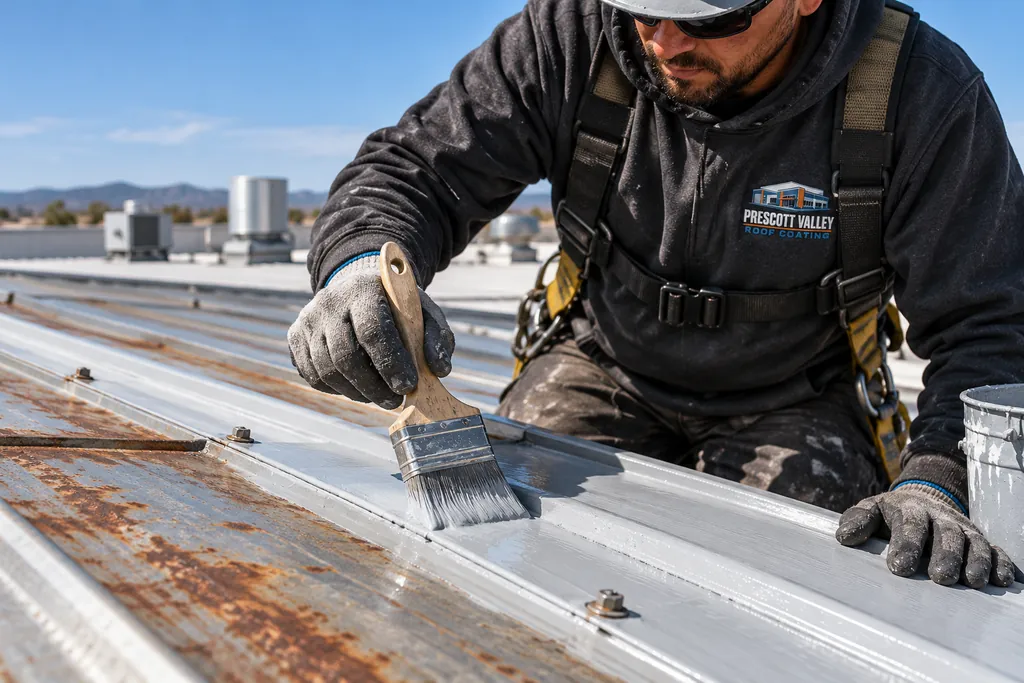
Shops and storage buildings with exposed-fastener panels, sealed at laps and screws before coating.
How metal roof coating works
We provide roof coating for commercial buildings in Chino Valley, including parcels with a shop, office, and storage building. Each roof gets its own inspection and place in the schedule.
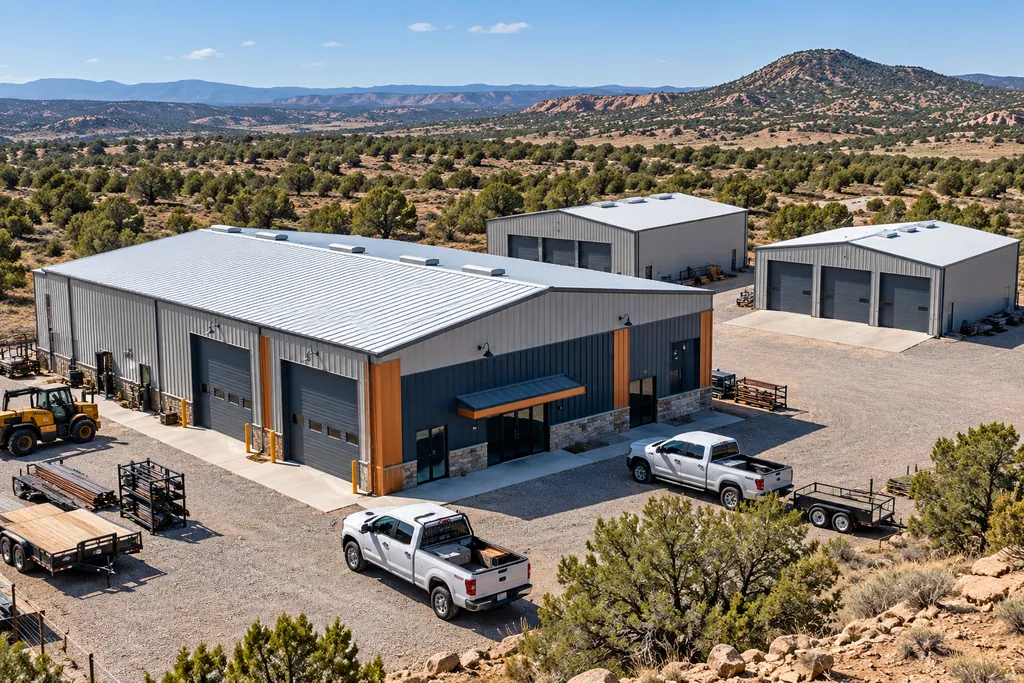
Many commercial properties in Chino Valley have more than one roof: a metal shop, a front office, and a storage building or two. They age differently, and they rarely need the same system or the same timing.
We inspect every roof on the parcel, then rank the work. The building with active leaks over inventory or people goes first, and the others follow in later phases, so the property keeps running while each roof is done.
The town's building division posts a 30 psf roof snow load, and these are the spots where snow and freeze-thaw show up first on metal shops.
Snow slides toward the eave and pulls on the lowest screws. Those rows back out first, so we check them closely and replace any with worn washers.
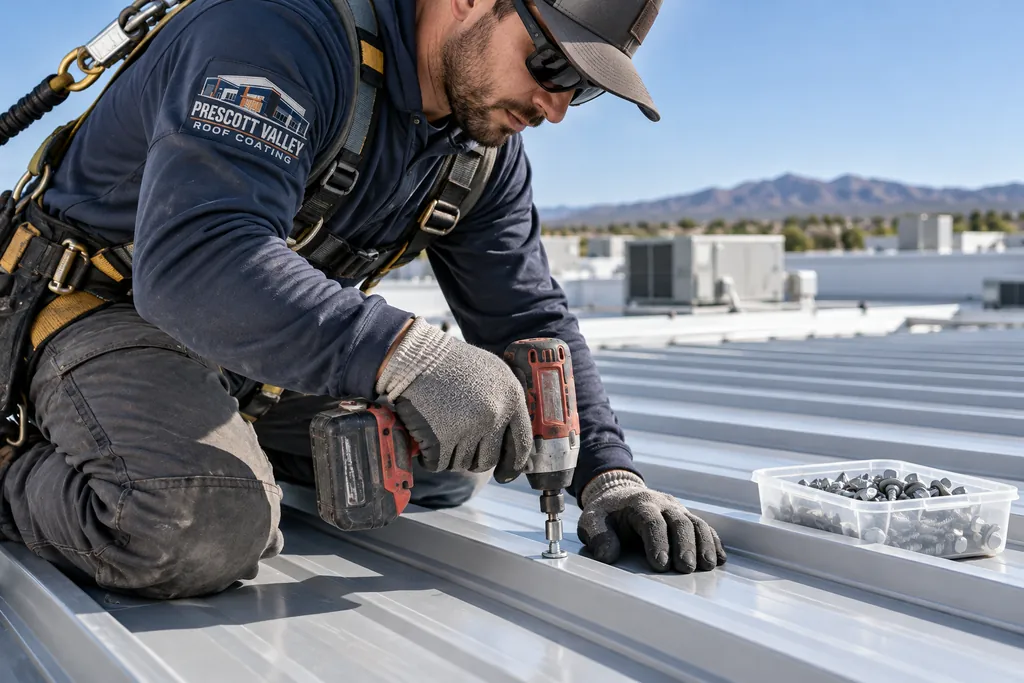
Long panel runs on shop buildings expand the most on sunny afternoons. Sidelap fasteners loosen and the laps open, so they get stitched tight and sealed before coating.
Ice packs into gutters and bends the hangers, and meltwater backs up under the eave trim. Gutters are cleared and refastened, and the trim joints are sealed.
Unheated storage buildings drip on cold mornings when warm air meets cold steel. We separate that from real leaks so the coating budget goes to the roof that needs it.
Shop exhaust fans and HVAC curbs break the panels into many small flashings. Each one gets resealed and wrapped with fabric so the corners hold through winter.
Coating one building at a time spreads the cost and keeps the property working.
Phasing lets the worst roof get coated this season and the next one after. Each phase is a complete job with its own inspection, repairs, and coating, so nothing is left half done.
Crews work on one roof while the shop and office on the same parcel keep running. Deliveries and parking shift across the yard as each phase moves.
Fastener and lap repairs before coating close the gaps snowmelt uses to reach stored equipment. Shops stay drier from the first snow to the spring thaw.
Coating keeps the existing panels on every building, which avoids the scrap and disposal of new sheet metal across a whole property.
Properties here often need two systems: one for metal buildings and one for a flat-roof office.
Shops and storage buildings with exposed-fastener panels, sealed at laps and screws before coating.
How metal roof coating works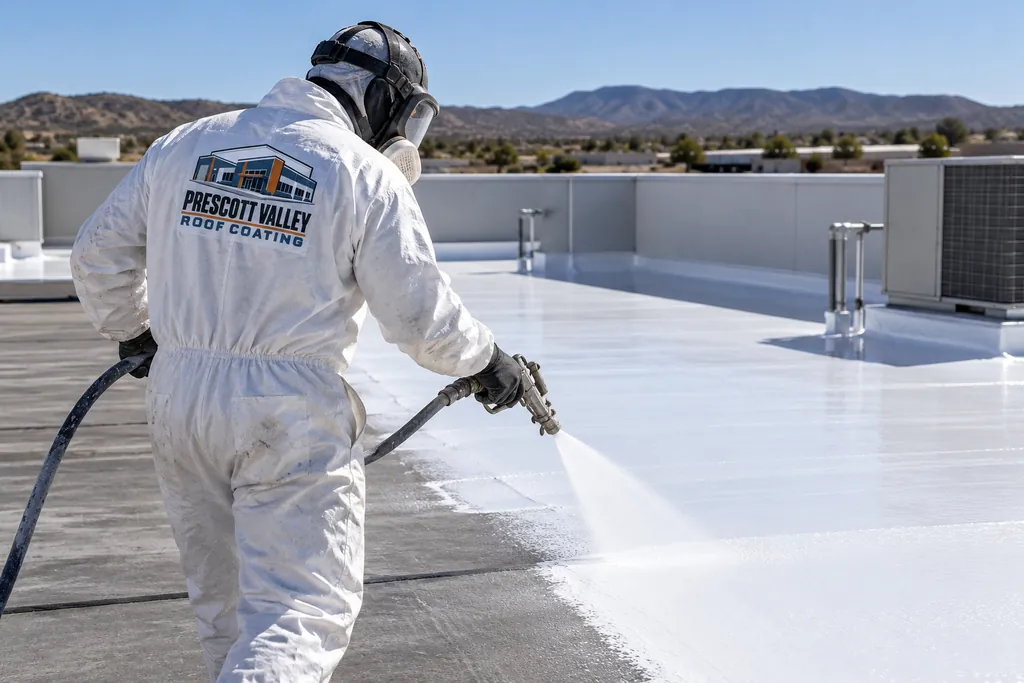
Flat-roof offices and additions where snowmelt pools near drains and scuppers.
How silicone roof coating works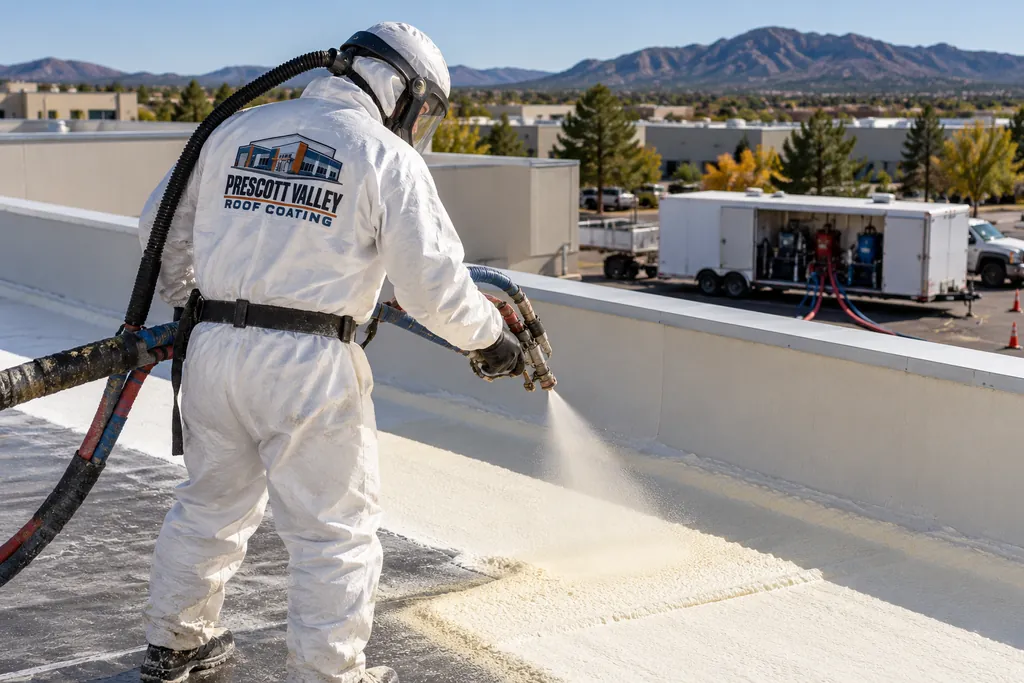
Unheated metal buildings that need insulation as well as a new waterproof surface.
How spray foam roofing worksCall and tell us which building and where inside the drip lands. Every roof on the parcel can usually be inspected in the same visit.
(928) 436-4811Every roof on the property is inspected at once. The coating then happens one building at a time.
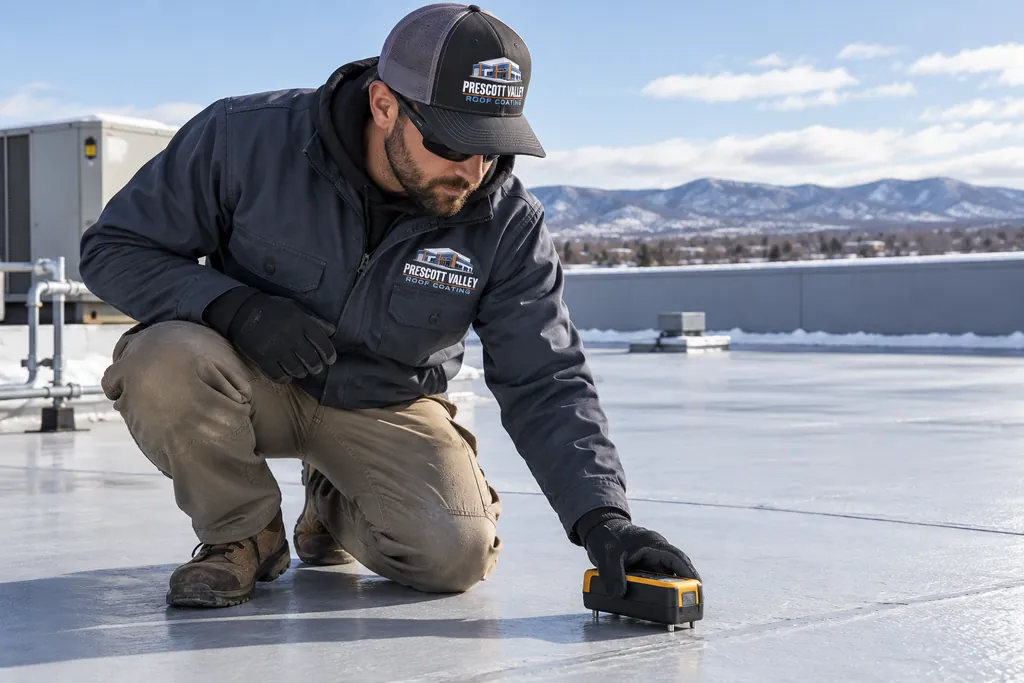
Every roof on the parcel gets moisture readings, a fastener and lap check, and photos. You get one report that ranks the buildings by urgency.
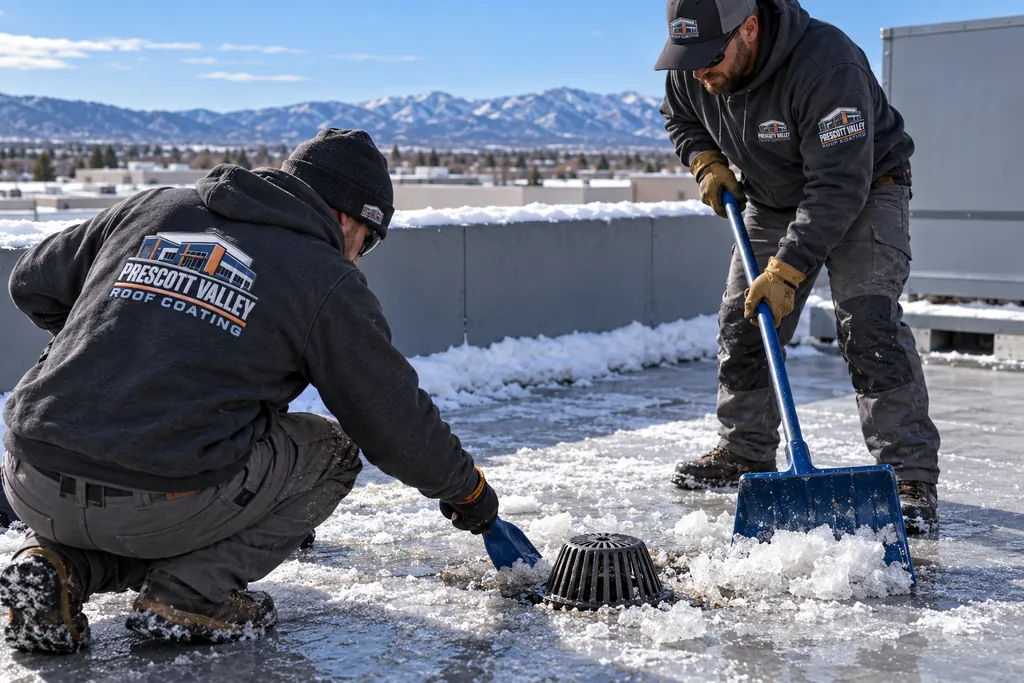
Gutters and drains are cleared first on every building. Active leaks over people or inventory then go to the front of the schedule, and the rest follow in phases you choose.
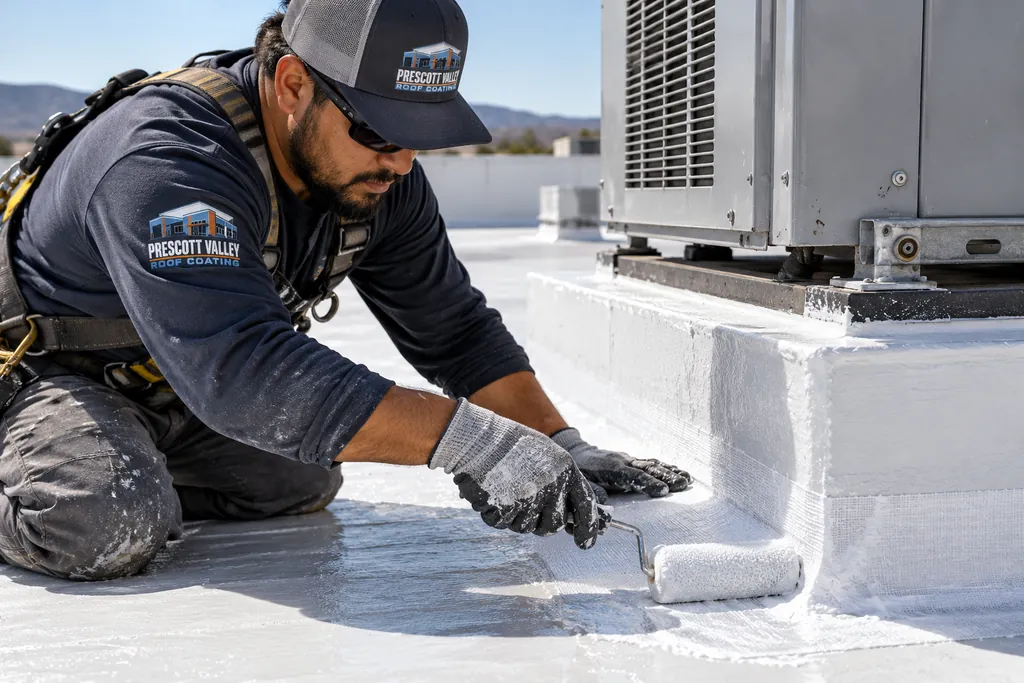
Fasteners, laps, curbs, and gutters are repaired on the building in progress. Wet insulation on any flat-roof section is cut out and replaced before coating.
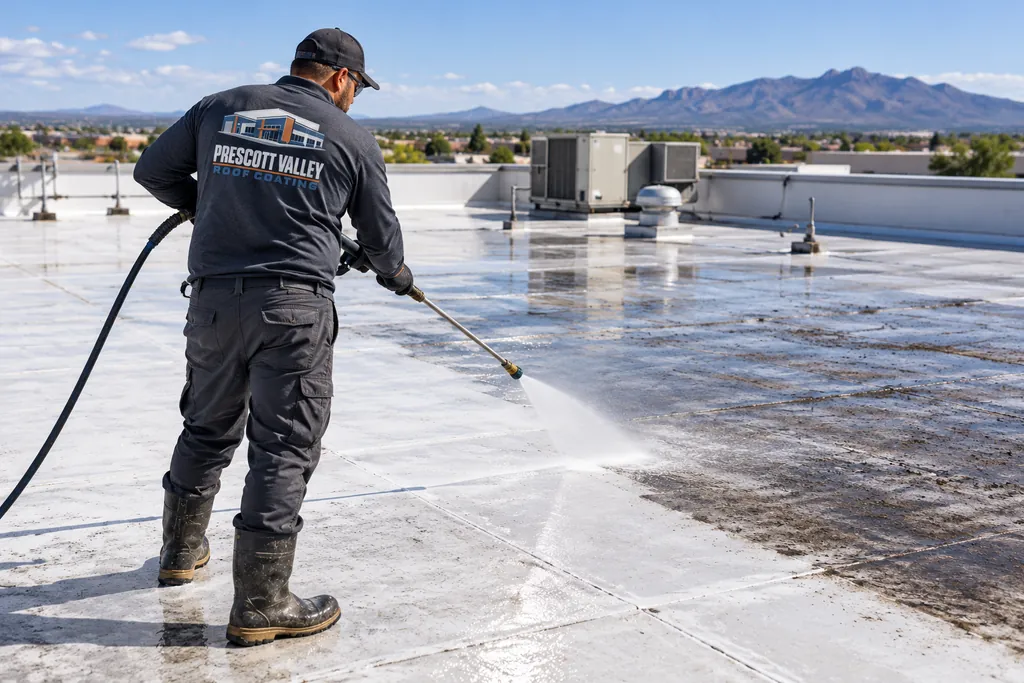
The roof is washed, primed where needed, and coated with the system chosen for it. Metal shops and flat offices can carry different coatings on the same parcel.
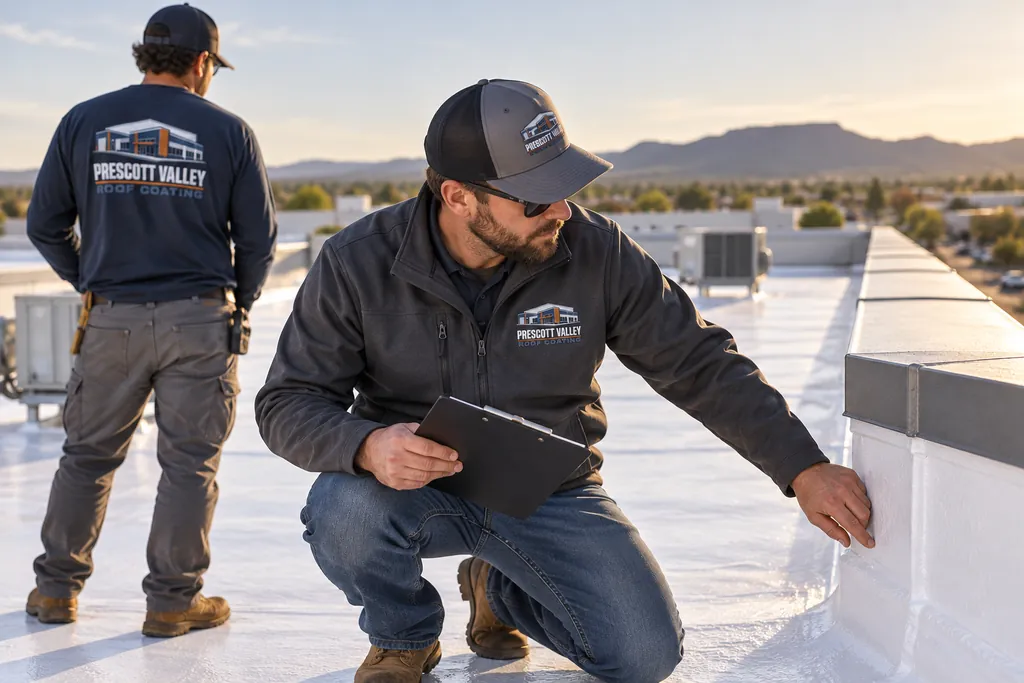
A walkthrough of each finished roof closes the phase before the next building starts. The report for the parcel is updated so you can see what is done and what is next.
Chino Valley sits north of Prescott on SR 89.
Most asked
Inspect each roof in spring, after the freeze-thaw season, and again in fall before snow. Between visits, keep drains, scuppers, and gutters clear for snowmelt and monsoon rain, check flashing and parapets for ice damage, have the roof checked after hail, use plastic tools to clear snow, and patch worn spots before winter.
Yes. Each building is its own job with its own repairs and coating. Phasing over two or three seasons is common on parcels with several roofs, and the inspection report keeps the whole plan in one place.
It is the roof snow load the Town of Chino Valley posts for structural design. A coating adds only a fraction of a pound per square foot, so it does not change that capacity. Heavy snow concerns go to a structural engineer.
The town's building division lists the 2024 International Building Code and 2024 International Existing Building Code among its adopted codes. Whether a coating job needs a permit is confirmed with the town for each property.
Often the coating is the same, but the plan changes. Cold steel in unheated buildings drips condensation, so we check whether insulation or ventilation is part of the fix. Spray foam covers both needs when the budget allows it.
Yes. We mark a staging area away from traffic lanes, keep the lift inside a fenced or coned zone, and schedule spraying when wind is low so overspray stays off vehicles and stored equipment.
Start with the inspection report, which prices each building separately and ranks them. Many owners coat the leaking roof first and plan the others for later seasons, when the repairs needed are already known.
Yes. Gutters full of ice, leaves, or grit hold water against the eave and hide damaged trim. They are cleared and refastened before coating so the edge of the roof drains freely.
List the buildings on the parcel and which one leaks first. We inspect them in one visit and give you a phased plan.
Leave a name and number and a roofing contact will call you back.
Or call now: (928) 436-4811