Metal Roof Coating
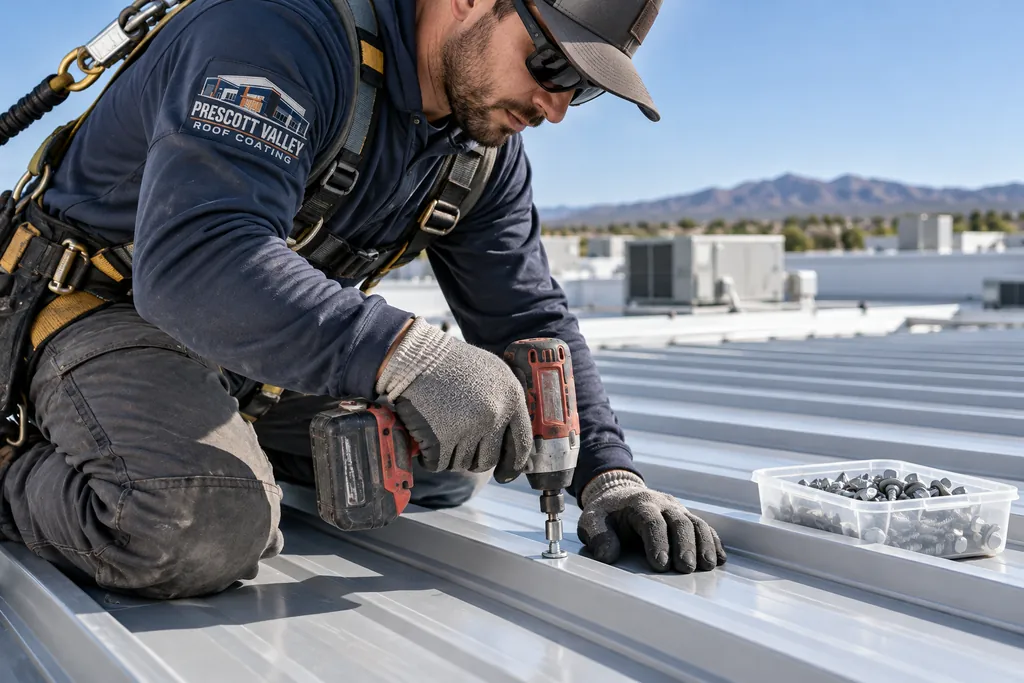
Exposed-fastener barns and shops, with screws, laps, and trim repaired before an acrylic or silicone coat.
How metal roof coating works
We coat metal shops, barns, and equipment buildings on commercial and agricultural parcels in Paulden. Most are exposed-fastener roofs that need screws and laps fixed first.
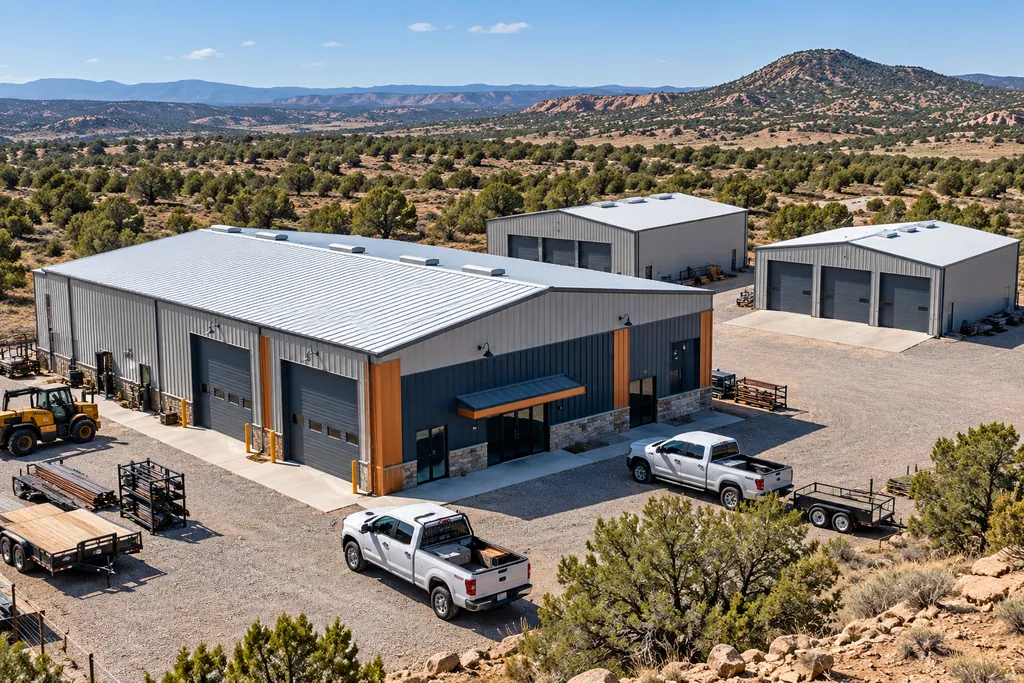
Commercial roofs in Paulden are mostly metal: equipment barns, workshops, hay and storage buildings, and ranch offices on parcels north of Chino Valley along SR 89. Open ground means wind, sun, and snow all hit the roof with nothing around it.
Rural jobs need a little more planning. The lift and coating rig come in on gravel drives, washing water sometimes has to be brought in, and work is timed around the busiest weeks of the property's own calendar.
Open sites take more wind and sun than town buildings. These five areas show it first.
Gusts across open land pull at ridge caps and lift loose closures. We refasten the cap, replace torn closures, and reinforce the ridge joints before coating.
Panels near the eaves and rakes flex most in wind, so those screws loosen first. Every edge row is checked, and backed-out screws are replaced with larger fasteners.
Trim pieces along the rake loosen and let wind-driven snow inside the building. Loose trim is refastened and the laps are sealed before the coating wraps the edge.
Translucent panels in barns turn brittle and crack in high-altitude sun. Cracked panels are replaced or covered before coating, since coating over them blocks the light anyway.
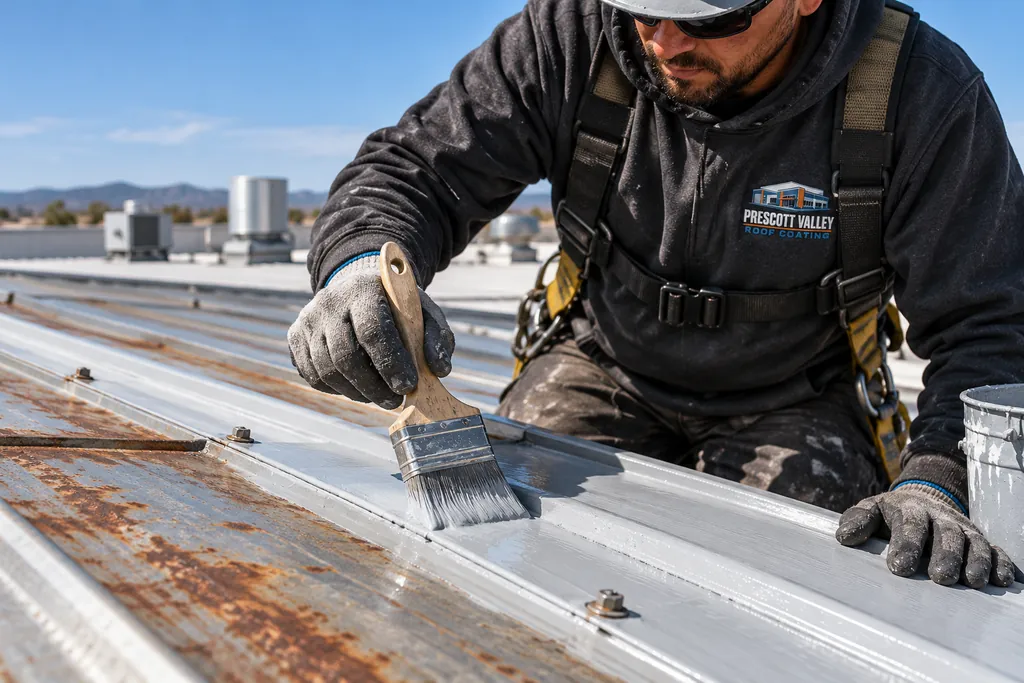
Dust and hay settle at laps and low points and hold moisture against the steel. Those spots rust first, so they get cleaned, wire-brushed, and primed.
A coated metal roof keeps a working building working. Here is what it does for a rural property.
Sealed fasteners and laps keep snowmelt and monsoon rain off the equipment, hay, and supplies stored inside. A coating covers every screw head on the roof in one continuous layer.
Coating saves the cost and haul of new panels to a rural site. The building stays in use while the roof is done one section at a time.
A white coating reflects part of the summer sun off the panels, which helps uninsulated workshops where people work through July afternoons.
Primer and coating keep moisture away from the steel at laps and low points, where dust and hay hold it against the metal through winter.
Two systems cover most rural metal buildings here.
Exposed-fastener barns and shops, with screws, laps, and trim repaired before an acrylic or silicone coat.
How metal roof coating works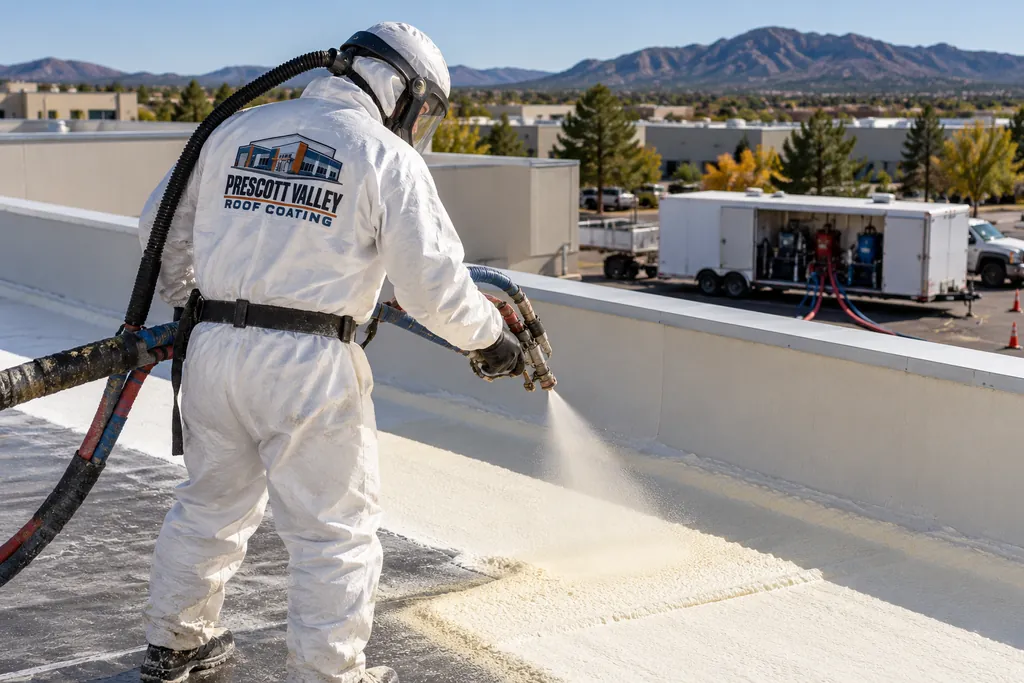
Uninsulated metal buildings where foam adds insulation and covers every fastener under one surface.
How spray foam roofing worksCall and tell us what is stored under the leak and how a truck reaches the building. We plan the first visit around both.
(928) 436-4811The order matches any metal roof. The planning around it accounts for gravel drives, wind, and a working property.
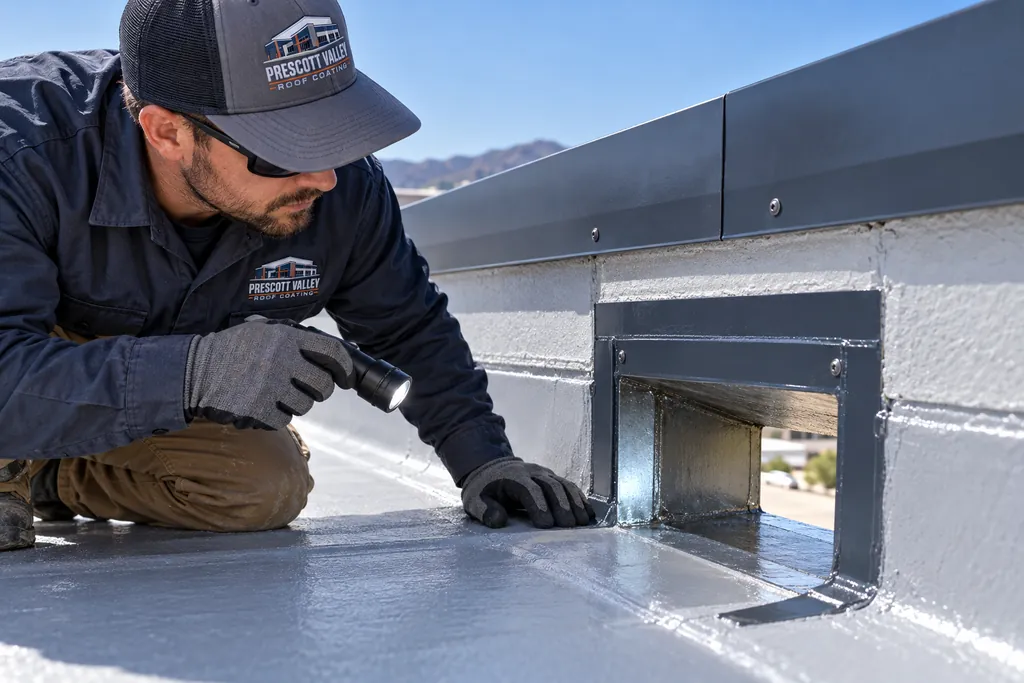
We check every fastener row, the trim, the ridge, and the clear panels, and look at the underside for condensation. The visit also maps the drive, gates, and where a lift can stand.
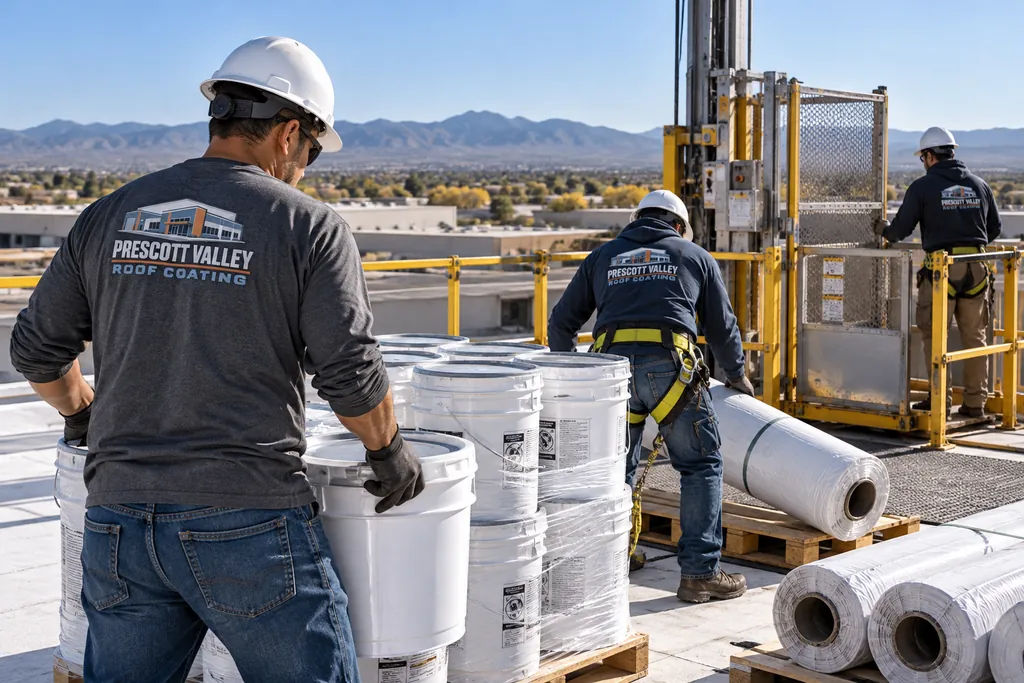
Lift and trailer routes get set on firm ground, and washing water is lined up if the property has none handy. Work is timed around your equipment moves and deliveries.
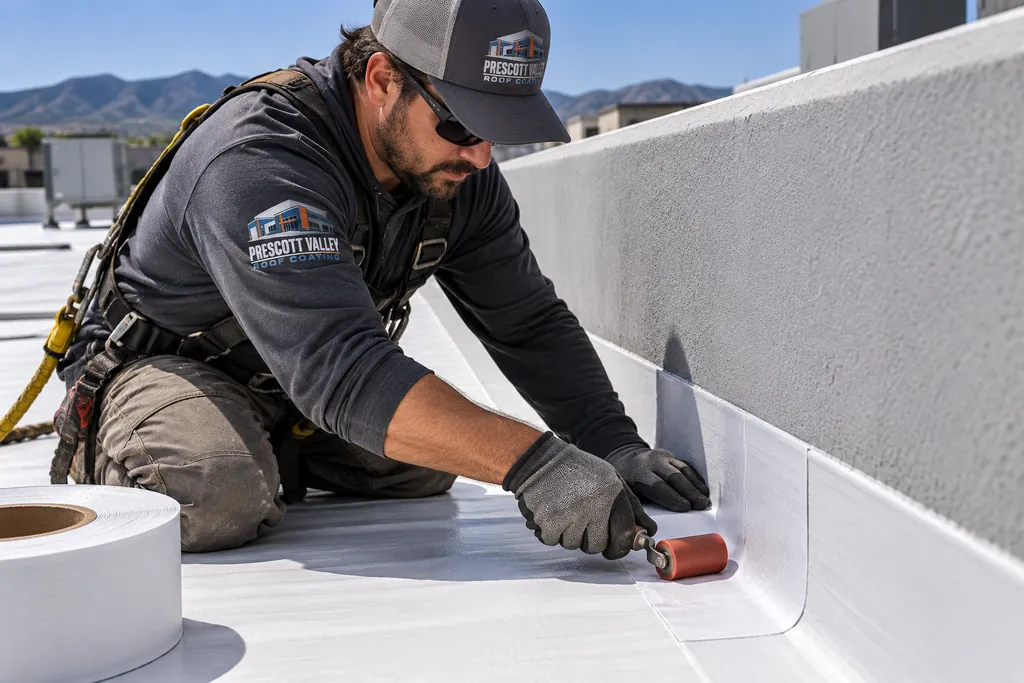
Backed-out screws, loose trim, torn closures, and cracked light panels are repaired or replaced. Laps are sealed so the coating covers a tight roof.
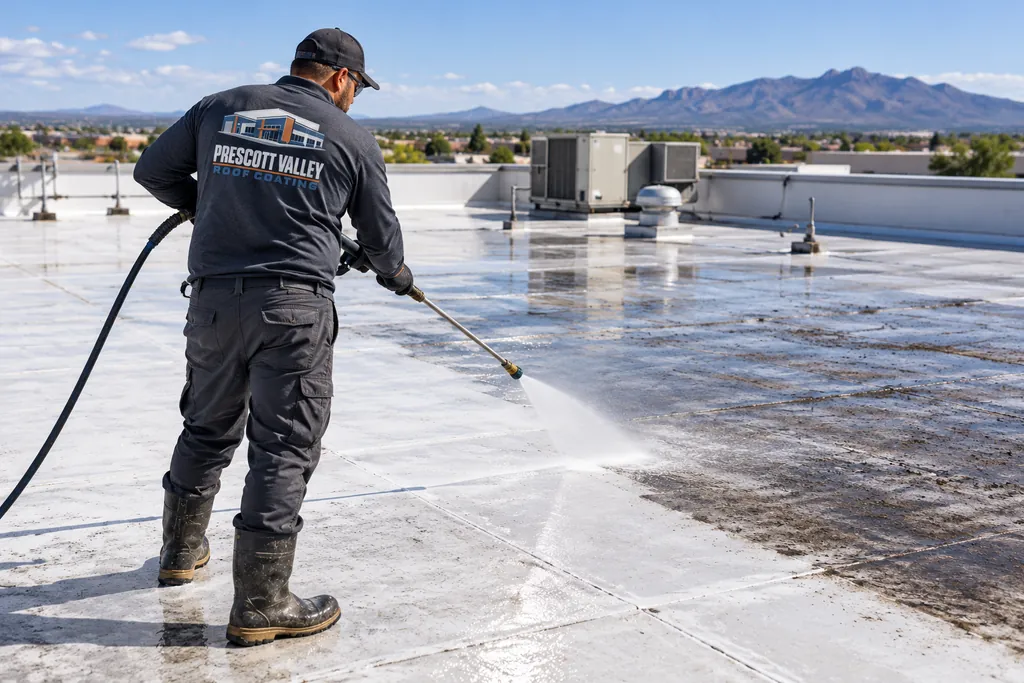
Dust and chalk are washed off, rust is primed, and the coating goes on during calm hours to keep overspray off the yard.
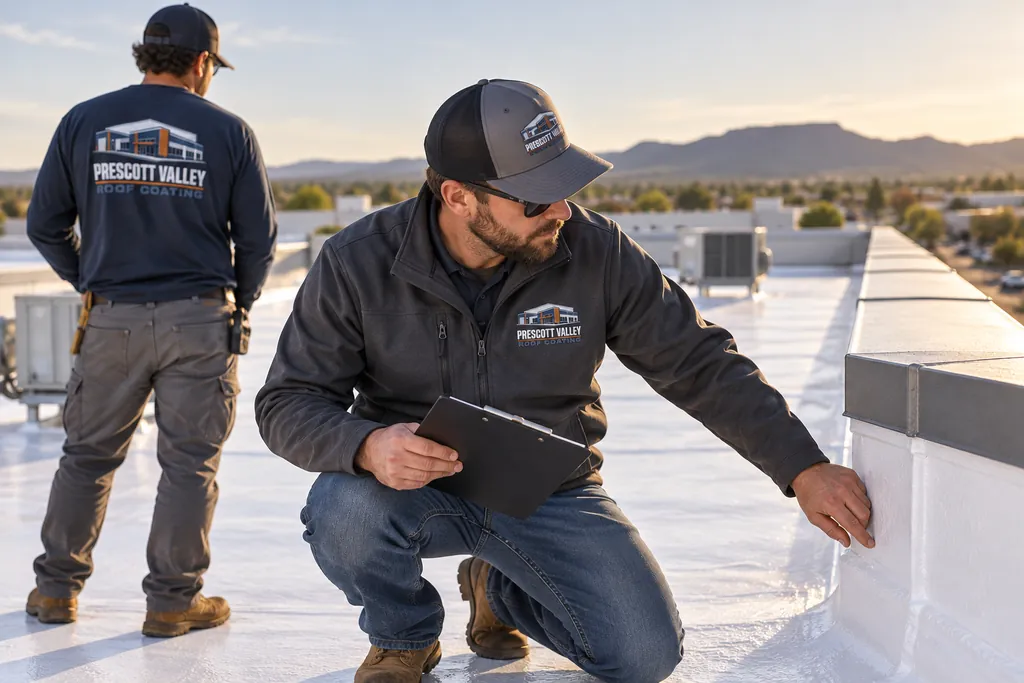
A final walk covers every edge row and the ridge, and you keep photos and a spring checklist for the building file.
Paulden sits at the north end of the SR 89 corridor.
Most asked
Paulden is unincorporated, so building permits for the area go through Yavapai County instead of a town office. Whether a coating job needs one comes down to the scope, and we confirm with the county before work begins.
Yes, when it is a commercial or agricultural structure such as a barn, equipment shed, or workshop. The approach is the same as any metal roof: fasteners, laps, and rust first, then the coating.
Washing needs a steady supply. If the property has a hydrant or well hookup, we use it with your permission. When it has neither, a water trailer comes with the crew.
Wind-blown dust can stick to a coating before it skins over. We start in calm morning hours, watch the forecast for wind, and pause work when gusts pick up dust from nearby fields or roads.
Yes, coating over a translucent panel makes it opaque. We replace cracked light panels with new ones and mask them during coating if you want to keep the daylight inside the barn.
Usually, after the paint is washed and any loose or flaking areas are removed. An adhesion test on a small patch confirms the coating will bond before the whole roof is done.
Rural work is booked like any other, with a little more lead time for access planning. Late spring and early fall fill first, so calling in late winter or summer gives the most choice of dates.
A smooth coating is slick when wet, frosted, or covered in snow. Snow also slides off coated panels more readily, so keep people and equipment clear of the eaves after a storm.
Tell us the building size, what is stored inside, and how the drive reaches it. We plan the visit from there.
Leave a name and number and a roofing contact will call you back.
Or call now: (928) 436-4811