Silicone Roof Coating
Pick silicone over acrylic where snowmelt sits near drains, or when the job has to run in cooler shoulder weeks.
Silicone roof coating details
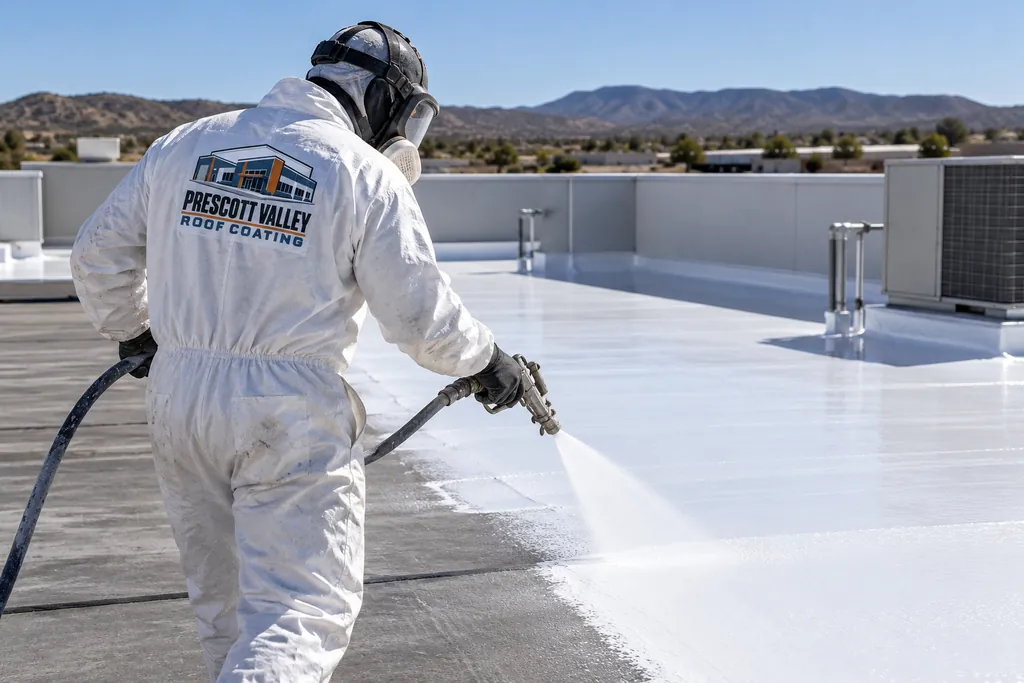
We apply white acrylic coatings to commercial roofs in Prescott Valley that drain well. Acrylic needs warm, dry days to cure, so we plan it around the freeze nights.
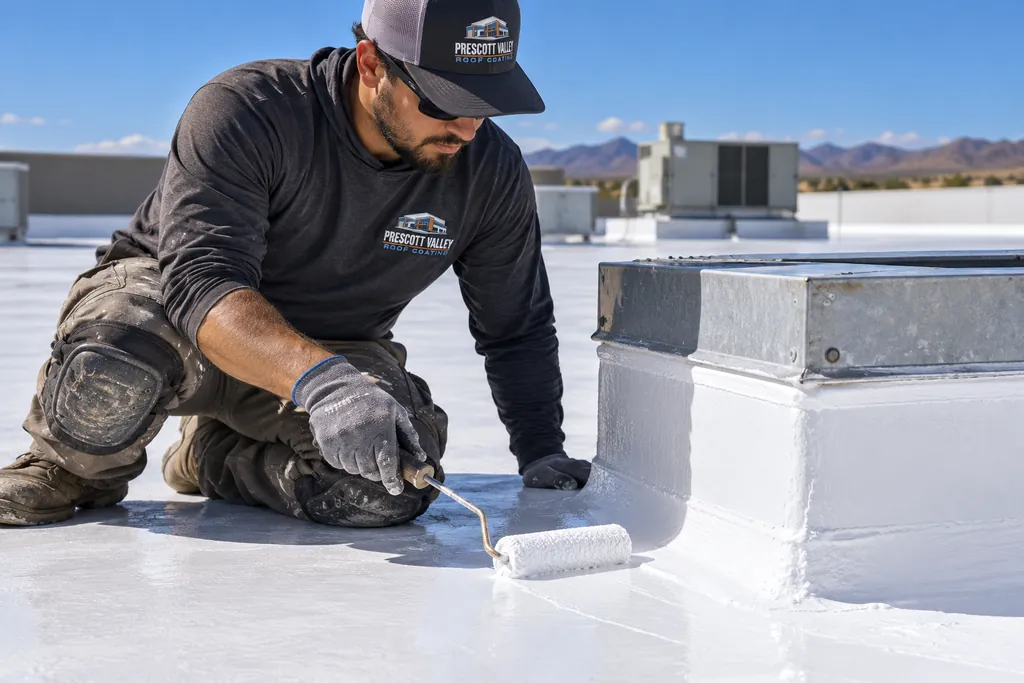
Acrylic is a water-based coating, so it works on roofs that shed water and breaks down where water sits.
Acrylic covers the open field easily. These five details decide whether it lasts.
Laps that open and close with cold nights get polyester fabric embedded in a base coat. The fabric lets the coating bridge movement that would crack a thin film.
Rooftop unit curbs move differently from the deck around them. Corners get a fabric collar and an extra coat, so the joint can flex without splitting.
Acrylic softens in water that sits for days, so drain areas are checked for slope. Where water lingers, the drain is lowered or the low ring is filled before acrylic goes on.
Coating carries up the wall and over the flashing termination, so meltwater sliding down the parapet meets one continuous surface. Loose counterflashing is fastened first.
Edge metal and gutters take the hardest freeze-thaw cycling on the roof. Fasteners are tightened, joints are sealed, and the coating wraps the edge where it meets the field.
Acrylic systems differ by how much fabric and how many coats a roof needs.
| Option | Best when | Coats and thickness | Season |
|---|---|---|---|
| Standard two-coat acrylic | The roof drains well and seams are tight | Base and top coat at the product's specified thickness | Late spring to early fall |
| Fabric-reinforced acrylic | Many seams, cracks, or an older built-up surface | Base coat with fabric, then two coats | The same window, with drier days for the base |
| Acrylic over metal | Pitched metal panels with sealed fasteners | Rust primer, then two coats | Warm afternoons with dry nights |
| Acrylic recoat | An older acrylic coating is worn but attached | Clean, spot-prime, then one or two coats | Late spring to early fall |
Acrylic is the budget-friendly option for roofs that drain well. Here is what it buys.
Acrylic usually costs less than silicone or foam, and it goes over the roof you already have. For a well-drained roof, that puts a full restoration within reach of a tighter maintenance budget.
A fresh acrylic coat reflects much of the summer sun, so the membrane underneath runs cooler and ages more slowly at high altitude in July.
Years later, acrylic recoats with more acrylic after a wash and spot repairs. That keeps the cost of each maintenance cycle predictable for the building budget.
Water-based acrylic has little odor during application, which helps on offices, clinics, and schools that stay open while the roof is coated.
Call early in the season. Acrylic jobs fill the warm, dry weeks of late spring and early fall, and repairs have to be done before those weeks arrive.
(928) 436-4811Acrylic goes on in layers, and each layer needs dry weather to cure before the next.
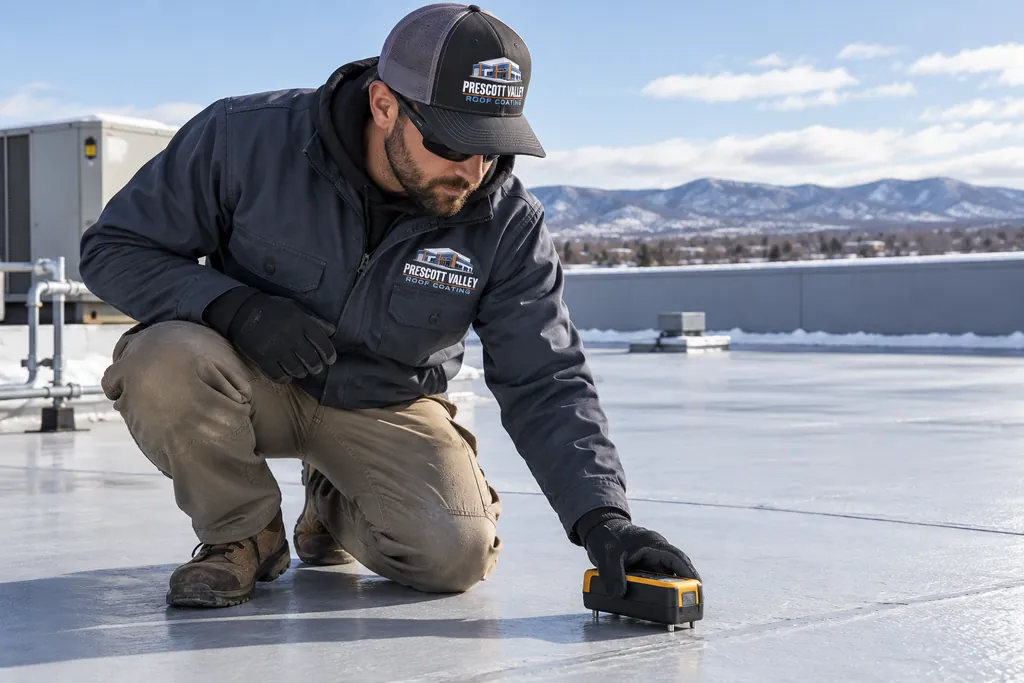
We check drainage after the last storm, take moisture readings, and look at every seam, curb, and drain. Ponding that lasts too long rules acrylic out early.
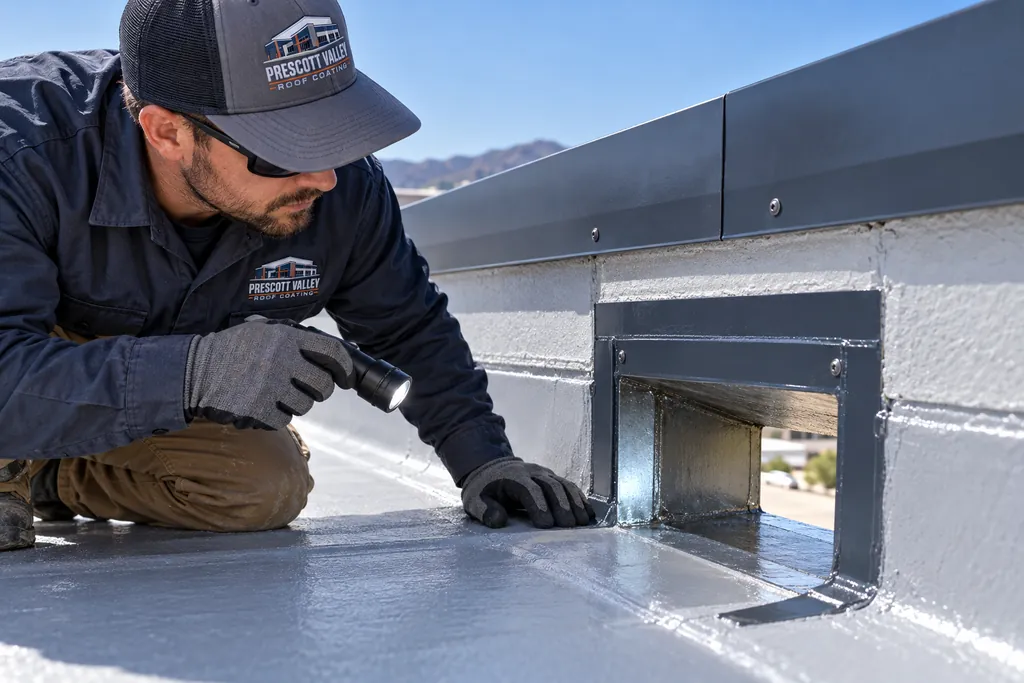
Seams, scuppers, and edge metal are repaired, and wet insulation is replaced. Loose counterflashing is fastened so the coating can wrap it in one pass.
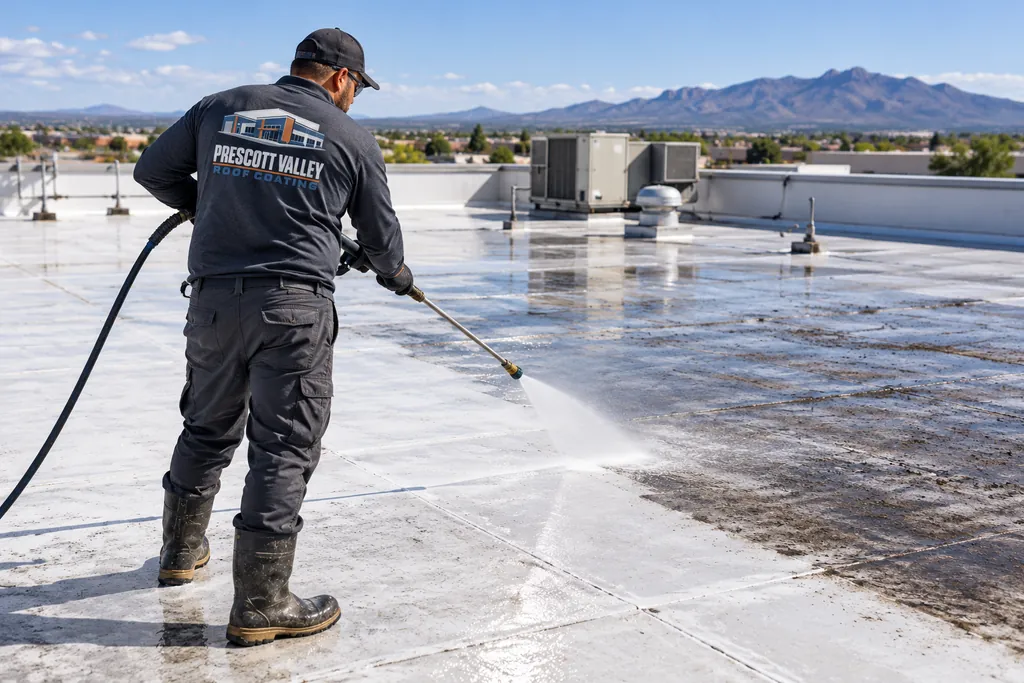
A thorough wash removes dust and chalking so the base coat bonds. The roof dries completely before any coating goes on, which on cool mornings can take until midday.
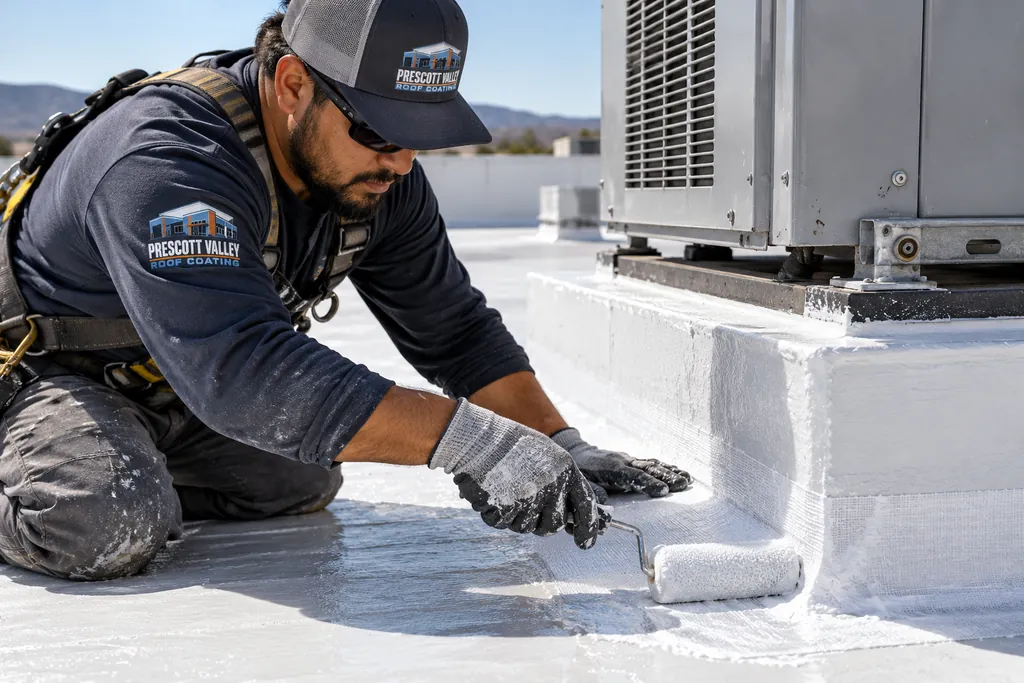
The base coat goes on with fabric pressed into seams, curbs, and cracks. It cures overnight above the product's minimum temperature before the top coat.
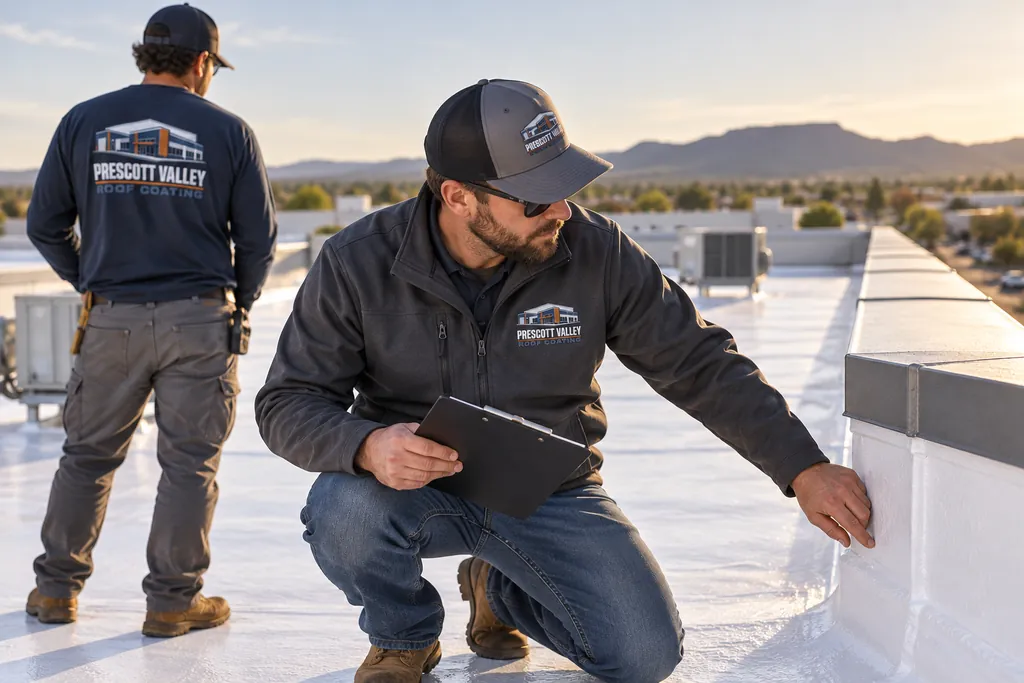
A second coat brings the roof to full thickness. We walk it with you, confirm coverage at every detail, and note the spring check to book.
Two neighbors in the lineup come up when acrylic is close but the roof calls for something else.
Pick silicone over acrylic where snowmelt sits near drains, or when the job has to run in cooler shoulder weeks.
Silicone roof coating details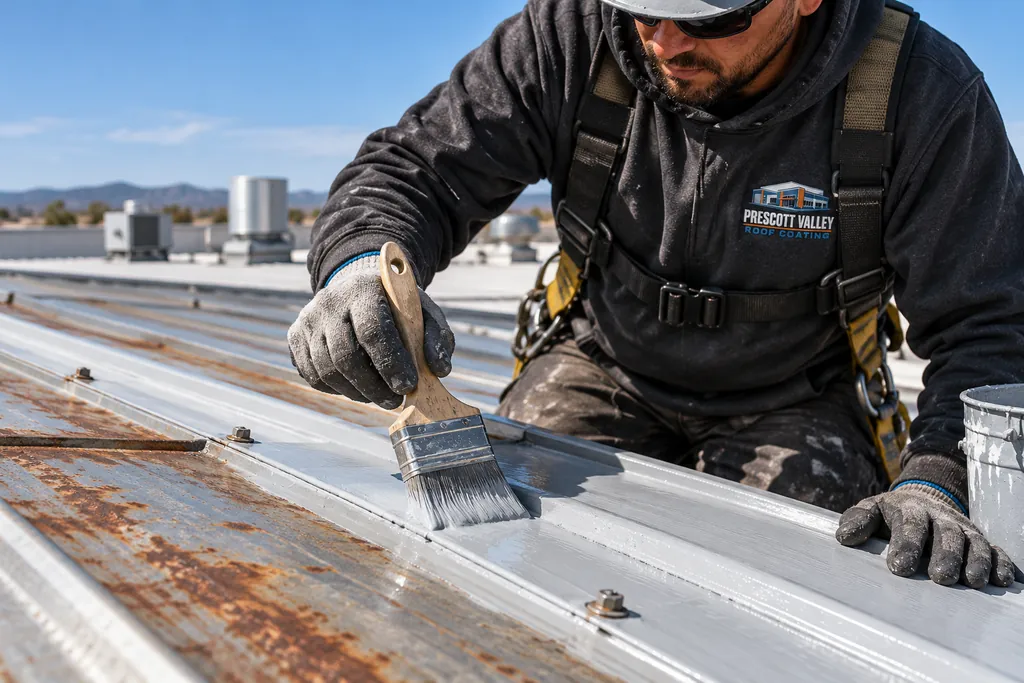
Pitched metal buildings often take acrylic over primed panels, with the fastener and lap work done first.
Metal roof coating detailsMost asked
Late spring and early fall are the most reliable windows. Acrylic needs dry weather and temperatures above the product's minimum long enough to cure, and nights at this elevation dip near freezing well into spring and again in fall. Summer works with early starts around monsoon storms, and winter work is avoided.
Acrylic cures as its water evaporates, and that stops when the roof is cold or damp. The Prescott weather station averages about 27 nights at or below freezing in both December and January, so coatings applied then risk freezing before they cure.
Rain before the coating skins over can wash it off the roof, leaving milky runoff and thin spots. We schedule application for mornings with dry forecasts and leave enough time before evening dew for the surface to set.
Short-lived puddles that dry within a day are fine. Water that sits longer softens acrylic and it wears away in those spots, so those low areas get fixed or the roof gets silicone instead.
A new acrylic coat is bright white and dulls with dust over time. A rinse in spring restores much of the color, and the coating keeps protecting the roof even when it looks dingy.
Over an older acrylic, yes, after washing and spot repairs. Over silicone, no, since acrylic will not bond to it. An adhesion test tells us what is on the roof when records are missing.
Acrylic is one type of elastomeric coating, meaning it stretches and recovers as the roof moves. Silicone and polyurethane are elastomeric too, and the right one comes down to drainage and foot traffic.
Tell us how the roof drains and roughly how big it is. We inspect early so repairs finish before the warm, dry weeks.
Leave a name and number and a roofing contact will call you back.
Or call now: (928) 436-4811