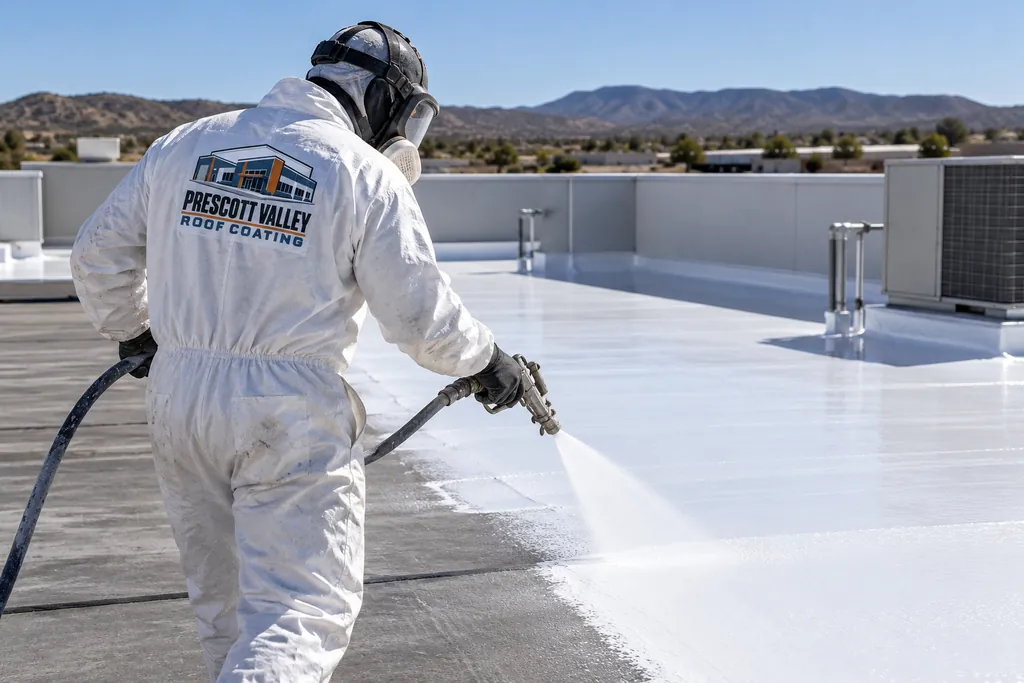
Silicone Roof Coating
Flat roofs behind parapets where water collects at scuppers and drains. Silicone holds up in that standing water.
How silicone roof coating works
We provide commercial roof coating in the City of Prescott, from downtown brick buildings with tall parapets to newer retail and office roofs. Staging and permits are planned first.
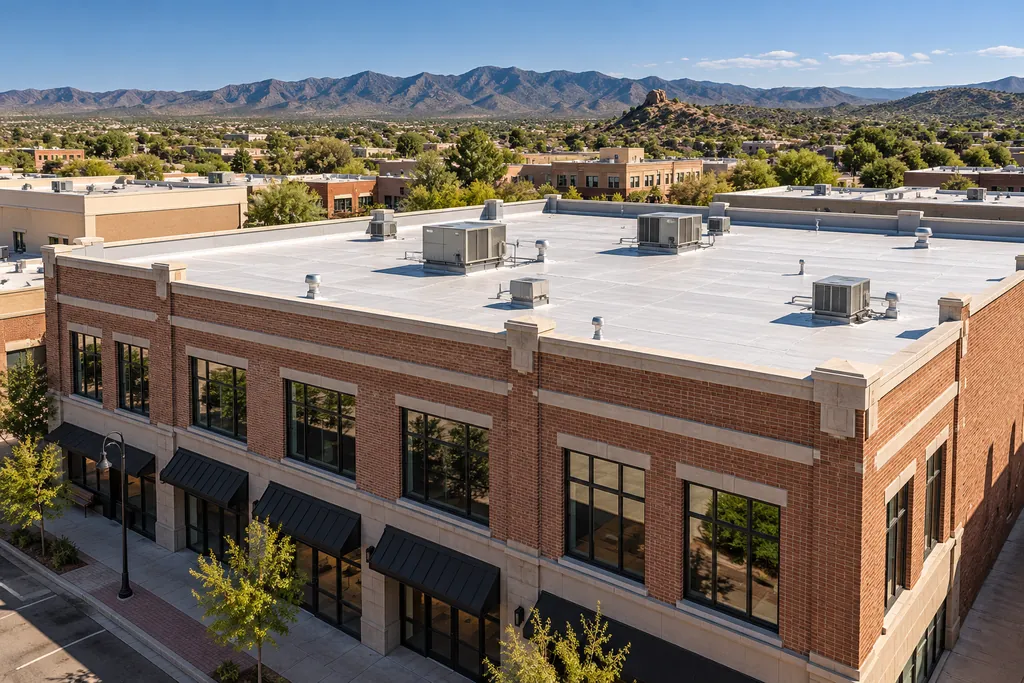
The City of Prescott's preservation plan covers 16 historic districts, including Courthouse Plaza. Many buildings in and around them are two-story brick with low-slope roofs hidden behind tall parapets, built tight to the sidewalk.
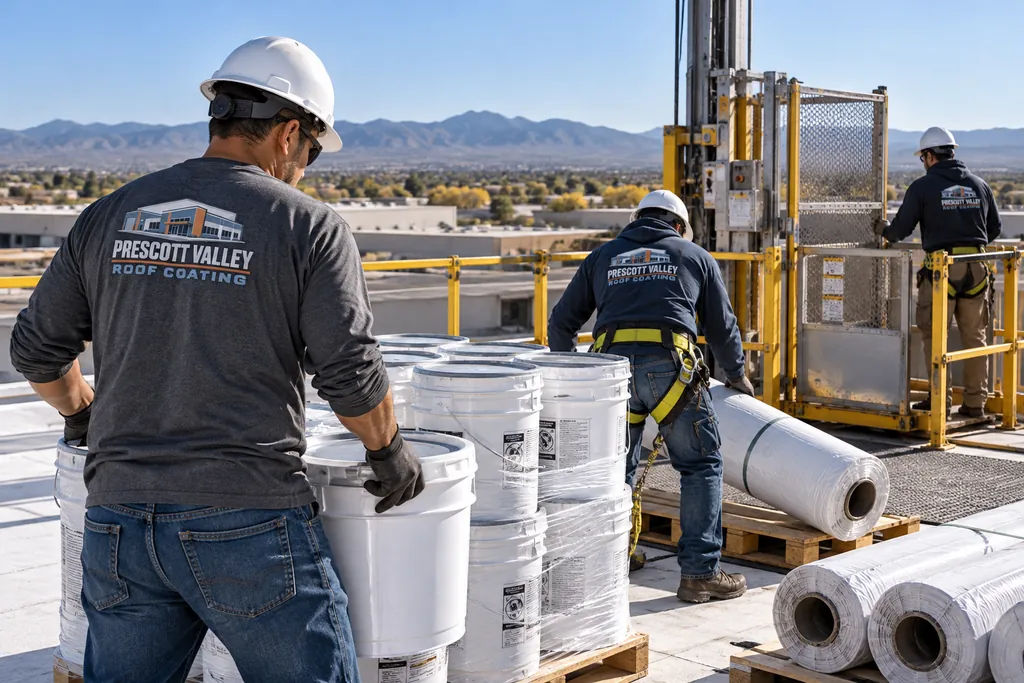
That layout shapes the job. A lift may need city approval to stand in the street or alley, materials go up in smaller loads, and parapet flashing gets as much attention as the field. A coating leaves the roofline unchanged behind the parapet.
The Prescott weather station records about 121 nights a year at or below freezing. Decades of that leave these marks on older low-slope roofs.
Brick parapets absorb snowmelt and push it down behind the flashing. We check the coping, the counterflashing, and the mortar joints just above the roof line before any coating.
Older buildings often drain through the wall instead of through interior drains. Scupper boxes rust and the wall below stains, so each box is cleaned, primed, and sealed.
Decades of repairs leave mastic, tar, and fabric patches stacked on the roof. Loose patches come off, and an adhesion test shows what the coating will bond to.
Cast-iron drains in older buildings clog and crack at the clamping ring. Clearing them and checking the flashing comes before any coating on the field.
Original skylights and roof hatches sit on wood curbs that rot at the base. Curbs are repaired or rebuilt before the coating wraps them.
Older downtown buildings get specific gains from a coating over a tear-off.
Tear-off on a tight downtown block means dumpsters, debris chutes, and days of street disruption. A coating goes on with far less of that, so shops and offices below keep their doors open.
The coating runs up the inside face of the parapet and over the flashing, sealing the joint where most older-building leaks begin in winter.
Keeping the existing roof cuts the material that has to come down through alleys and over sidewalks. Fewer loads mean fewer hours of blocked access.
Top-floor offices under dark roofs heat up in July. A white coating reflects part of that sun, which helps upper suites in older brick buildings with little insulation.
Three systems cover most commercial roofs in Prescott, from historic brick to newer retail.
Flat roofs behind parapets where water collects at scuppers and drains. Silicone holds up in that standing water.
How silicone roof coating works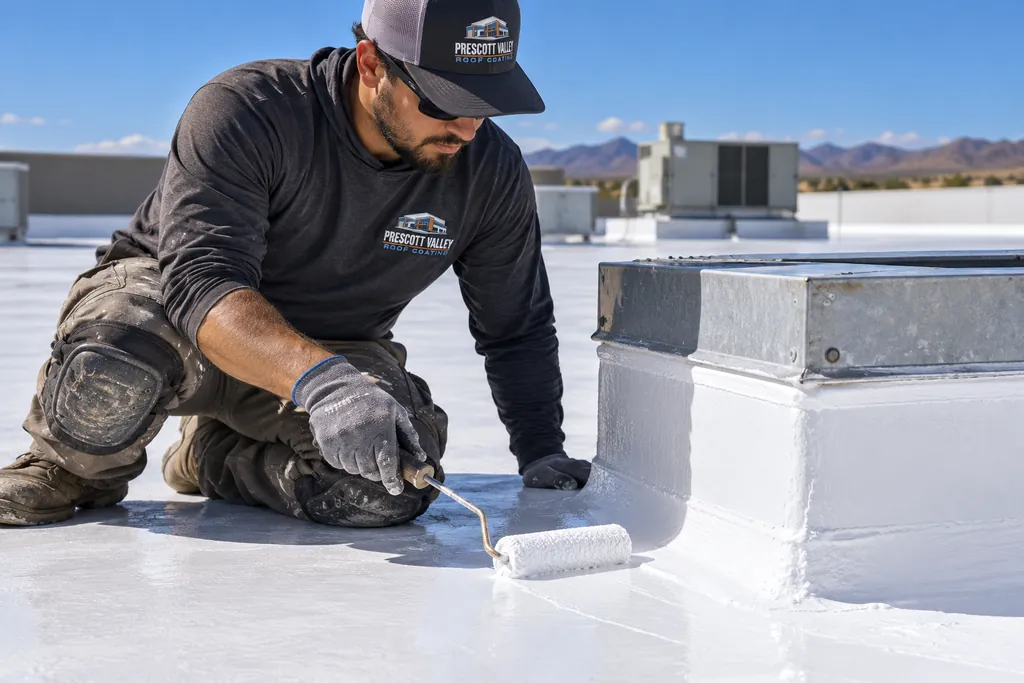
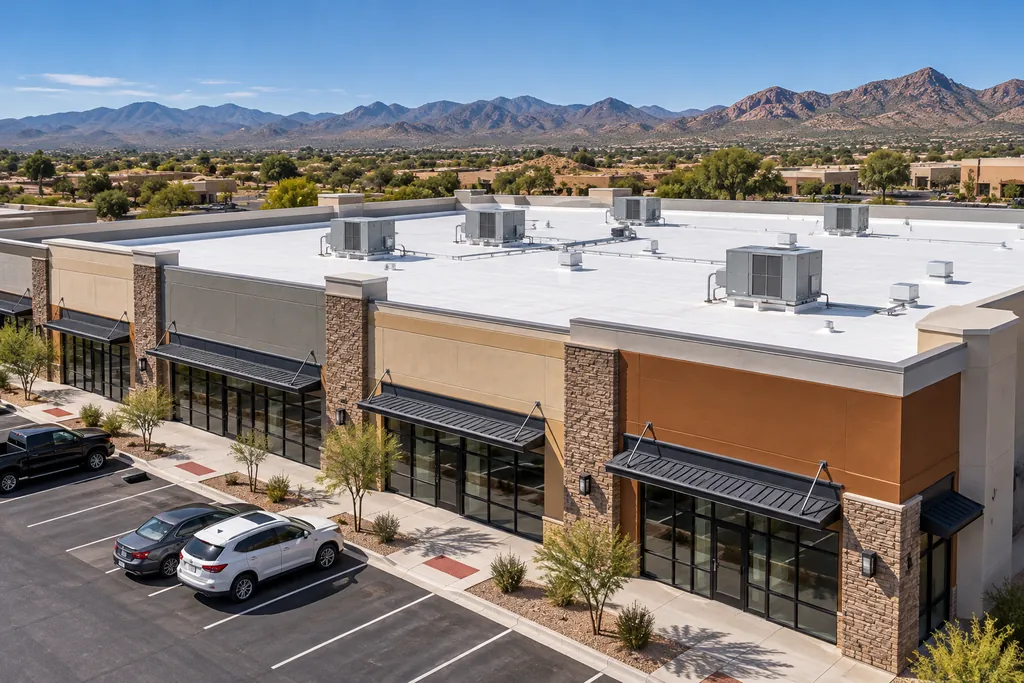
Newer retail and office roofs that drain well and see little foot traffic beyond HVAC service.
How acrylic roof coating works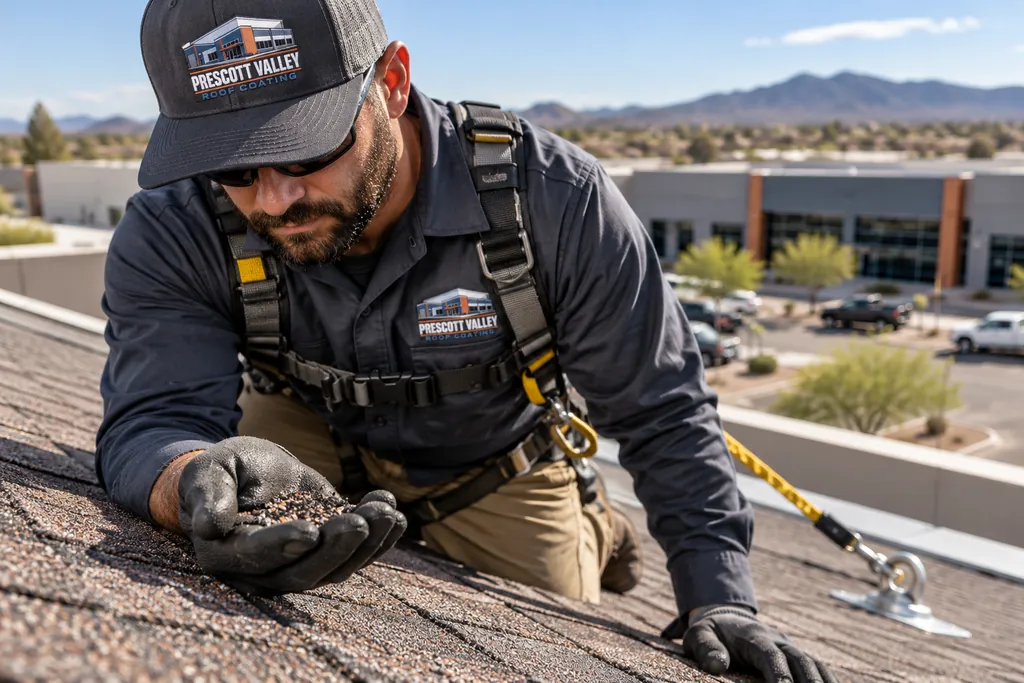
Pitched commercial shingle roofs, checked against the City of Prescott permit rule for second layers.
How shingle roof coating worksCall and tell us which wall the stain is on and whether it shows after snow or rain. Wall-side leaks usually start at flashing or a scupper.
(928) 436-4811Tight access adds planning at the front of the job. The roof work itself follows the same order.
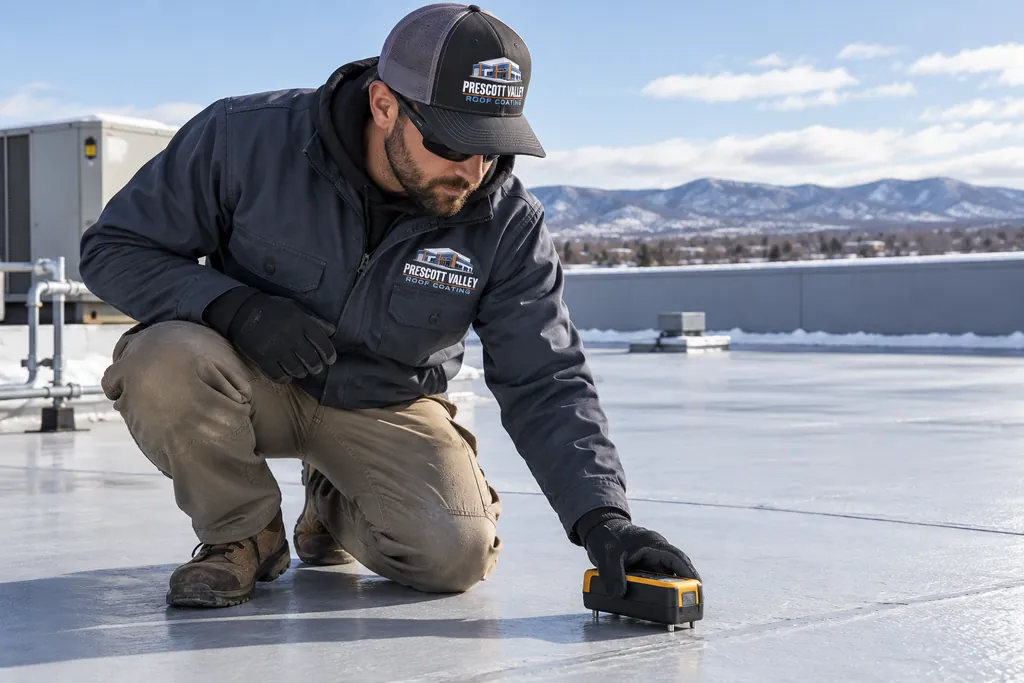
We check the parapets, scuppers, drains, and every old patch, and take moisture readings across the field. The inspection also notes where a lift or hoist can reach the roof.
Permit rules get confirmed with the City of Prescott, and we plan where materials, the lift, and old roofing waste go. Building managers and neighboring tenants get the schedule ahead of time.
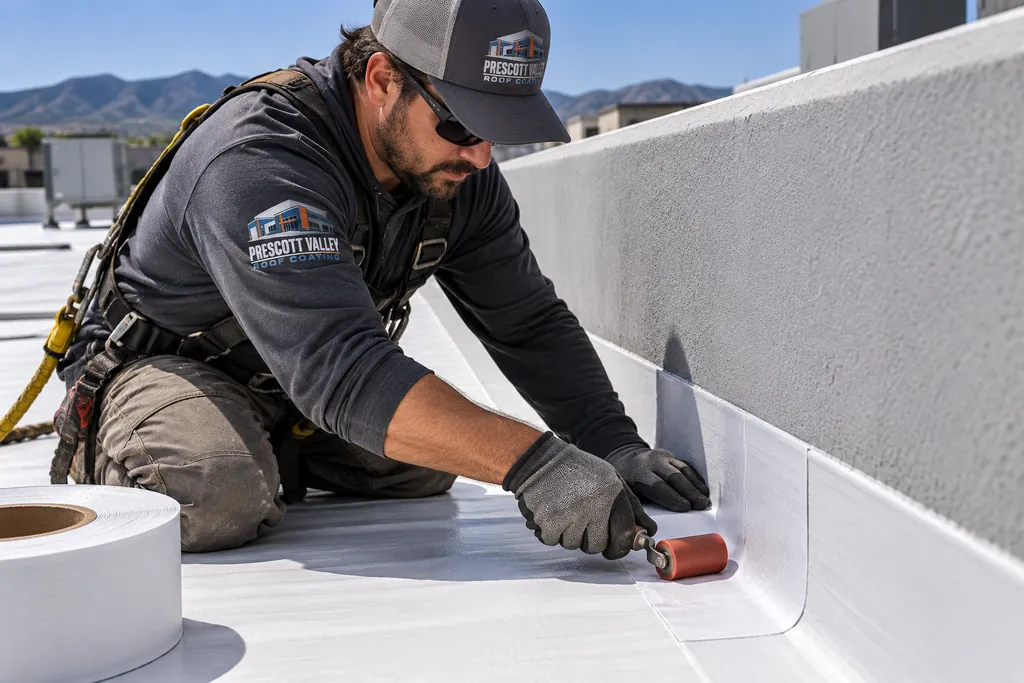
Loose counterflashing is refastened, scupper boxes are sealed, and old patches that will not hold are removed. Wet insulation found in cores is replaced.
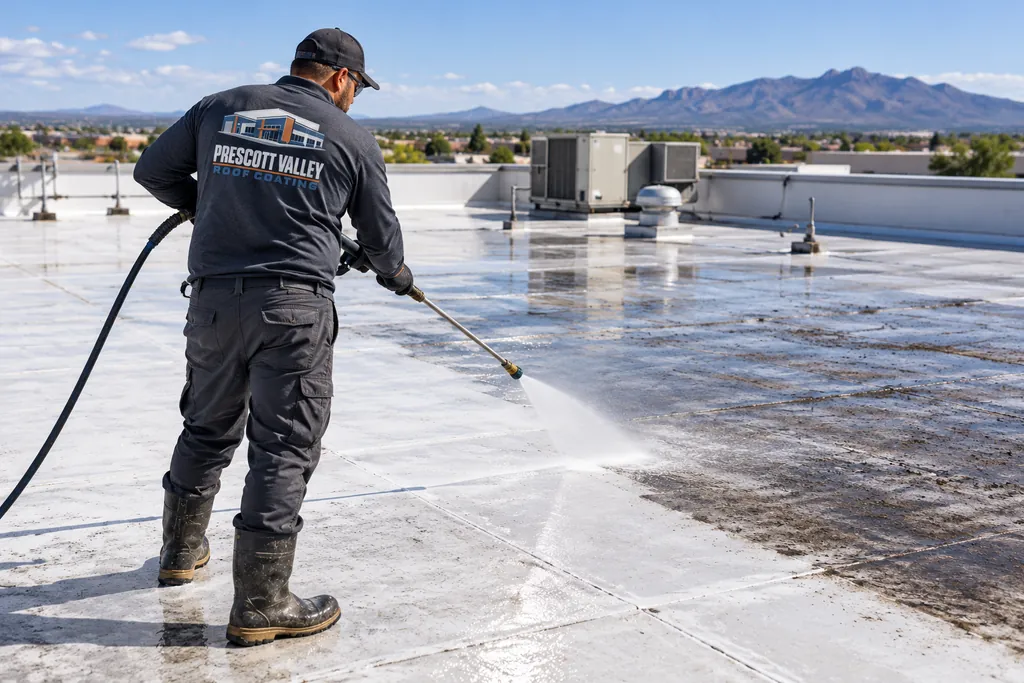
The roof is washed and dried, details are coated with fabric, and the field goes on in sections that can be finished in a day.
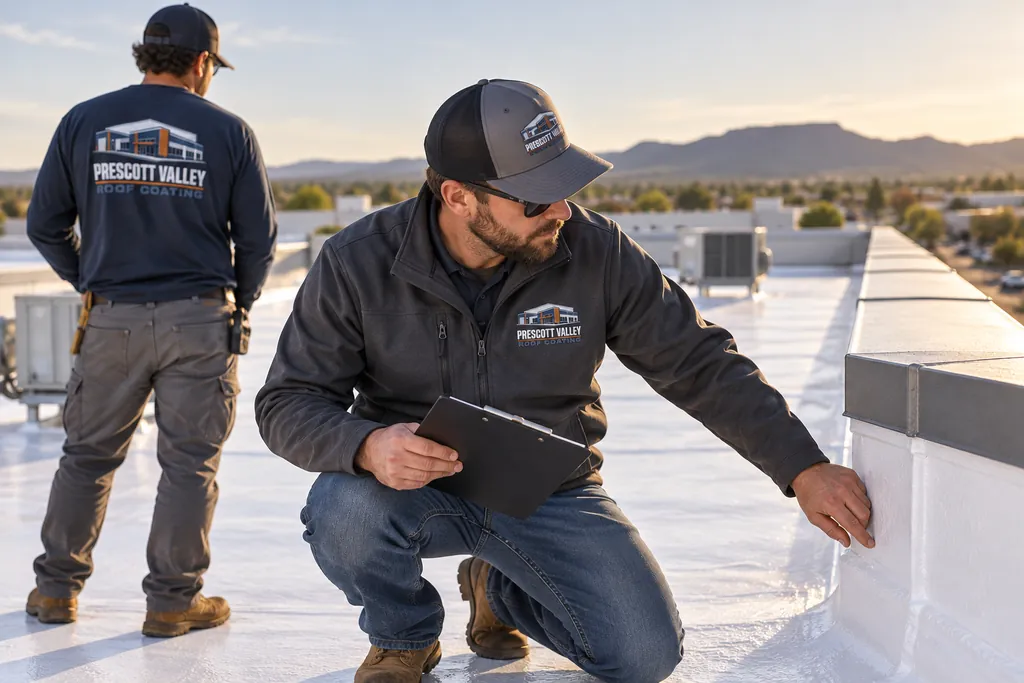
A final walk checks the parapet tie-ins and scuppers, and the street or alley is cleared and swept. You get photos and a maintenance list for the building file.
Prescott sits at the west end of the SR 69 corridor and the start of SR 89 north.
Most asked
They can, mostly for anything visible from the street. A coating on a low-slope roof hidden behind a parapet rarely changes how the building looks, and we confirm with the City of Prescott before work starts on a building in a historic district.
For some of it. The city's permit list calls for a commercial permit on a second layer of shingles and on a full tear-off or sheathing replacement. Coating is not on that list, so we confirm the requirement with the city for each job.
The City of Prescott Building Division lists 2024 codes in effect with city amendments, including the 2024 International Building Code. Snow loads are set site by site from the ASCE hazard tool rather than one city-wide number.
Sometimes, with approval. Many downtown buildings sit tight to the sidewalk with alley access behind. We look at both during the inspection and work out lift placement and any city approval before the schedule is set.
On a flat roof behind a parapet, almost never. The coating covers the roof surface and runs up the inside face of the wall. Pitched sections and canopies facing the street are the ones to talk through.
Mostly the top floor. Washing, foot traffic, and spray equipment make some noise overhead, and we set work hours with the building manager so the loudest steps happen when suites are quiet or empty.
Usually efflorescence, salt left behind as water moves through the brick and dries. It means water is getting into the wall, often from the coping or a cracked mortar joint, and we check those spots before coating the roof side.
Access planning adds a few days at the front. Roof work on a typical downtown building then runs several days to two weeks, depending on repairs, parapet length, and cure weather.
Tell us the street and whether the building sits in a historic district. We plan access and permits before the first visit.
Leave a name and number and a roofing contact will call you back.
Or call now: (928) 436-4811