Silicone Roof Coating
Many shingle buildings have a flat section over an addition or entry. Those low-slope areas often take silicone.
Silicone roof coating details
Shingle roof coating in Prescott Valley is for commercial asphalt roofs where the shingles lie flat and hold their granules. When they fail that test, we recommend replacement instead.
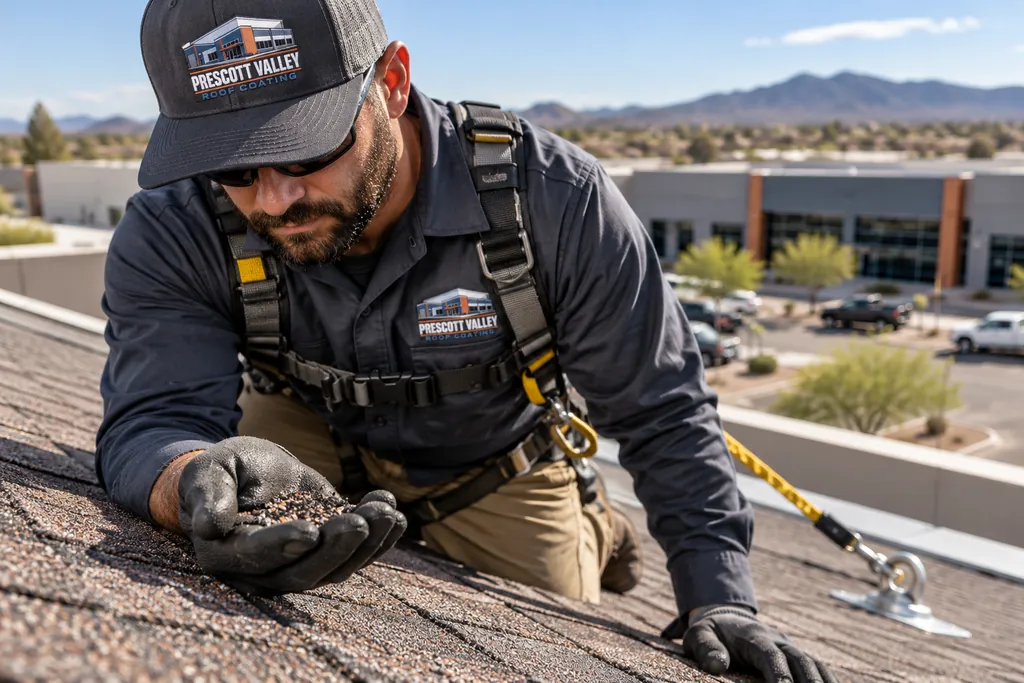
The test for a shingle roof is stricter than for a flat roof. Most of it comes down to whether the shingles still lie flat and hold together.
These are the spots that decide between coating and replacement.
Granules shield the asphalt from UV. When they wash into the gutters and the black mat shows through, the shingle is near the end of its life, and coating will not bring it back.
Freeze-thaw and sun shrink shingles until the tabs cup or curl. A coating has no way to glue a curled tab flat, so widespread curling points to replacement.
Snow melts on the warm part of the roof and refreezes at the cold eave, lifting the bottom rows. We check the first few courses and the drip edge for lifted or cracked shingles.
Valleys carry the most water on the roof, so worn valleys show up first as leaks inside. Open or worn valley metal gets repaired before any coating is considered.
Step flashing and counterflashing at walls loosen as the building and roof move apart. Resealing or replacing that flashing comes first on every shingle job.
A shingle inspection ends in one of three outcomes.
| Outcome | When it applies | What happens | Permit note |
|---|---|---|---|
| Coat the shingles | Light, even wear, and the maker allows coating | Wash, repair flashing, prime where needed, apply a shingle-rated coating | Confirmed with the town, city, or county for each job |
| Repair and wait | A few damaged areas on an otherwise solid roof | Replace damaged shingles, reseal flashing, and re-inspect in a year | Usually repair-level work, confirmed per job |
| Replace the roof | Curling, bare mat, soft decking, or two layers already | Tear-off and new roofing | In Prescott, a second commercial shingle layer and a full tear-off both need a permit |
On a shingle roof that qualifies, a coating buys time before replacement. These are the gains.
A shingle-rated coating seals hairline cracks and shields the asphalt from high-altitude UV. On a roof that passes inspection, that can put replacement off for years at a fraction of the cost.
Sun breaks down asphalt fastest where granules have thinned. Coating covers those spots and slows the drying and cracking that follows on south-facing slopes.
Every year the shingles stay on is a year the tear-off and its dumpster loads wait. Commercial shingle roofs carry a lot of weight to haul away.
If the roof fails inspection, you hear it plainly, with photos of the curled tabs or bare mat. That keeps you from paying to coat a roof that needs replacing.
Call and tell us the roof's age and where the granules collect. That helps us judge whether coating is still an option.
(928) 436-4811The first two steps decide whether the job goes ahead. Coating starts only after the roof passes them.
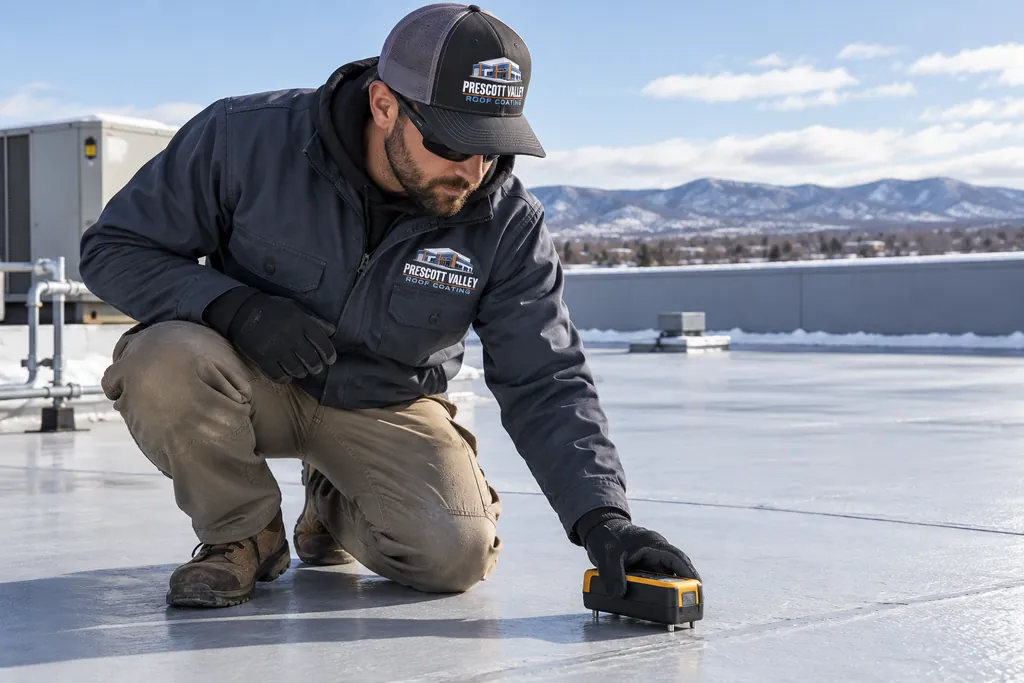
We walk every slope, check granules, tabs, and decking, and look at eaves, valleys, and flashing. Photos of each problem area go into a written recommendation.
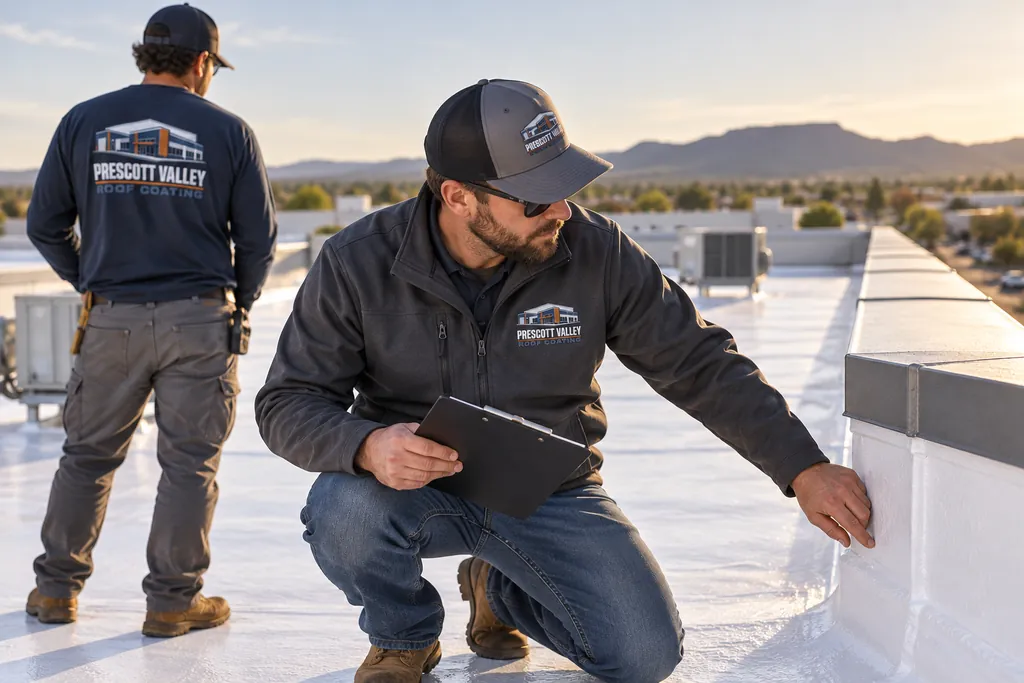
The shingle maker's guidance has to allow coating, and the town, city, or county sets the permit rule. If either says no, the job stops here and you get a replacement recommendation.
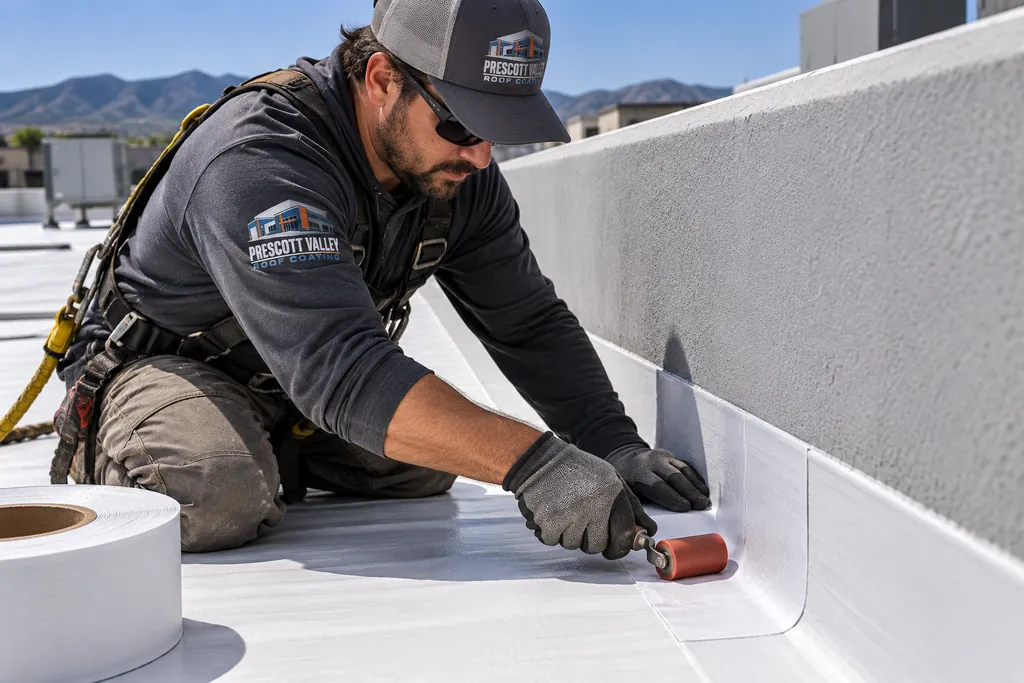
Lifted or cracked shingles are replaced, and wall flashing, vent boots, and valley metal are resealed so water cannot get behind the coating.
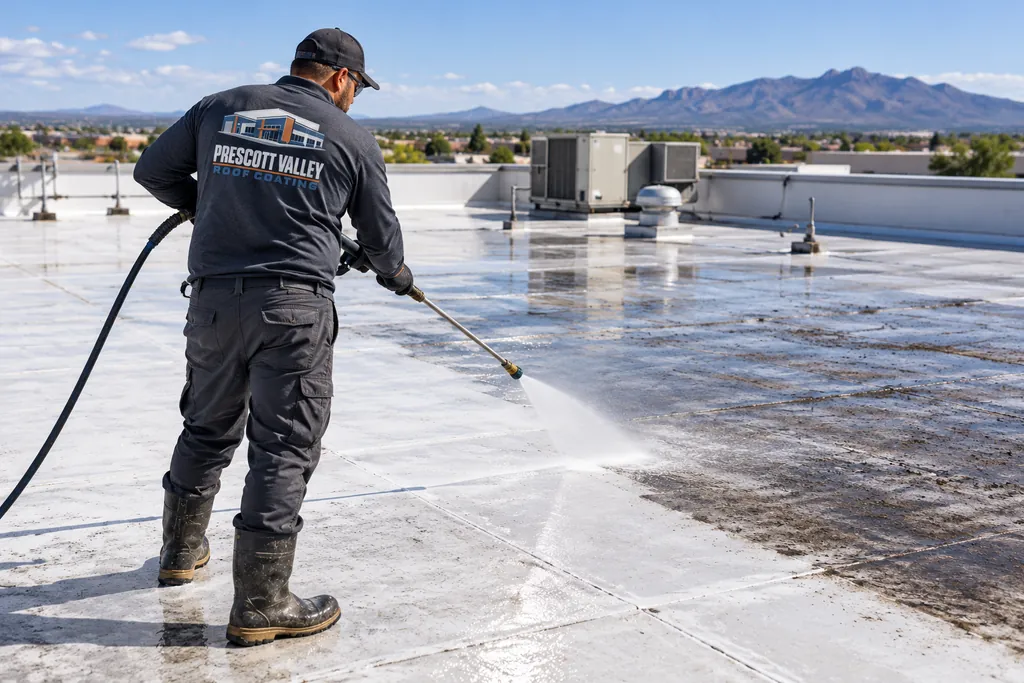
The roof is washed and dried, then a shingle-rated coating is applied at the maker's specified rate. Work stops when the forecast turns wet or cold.
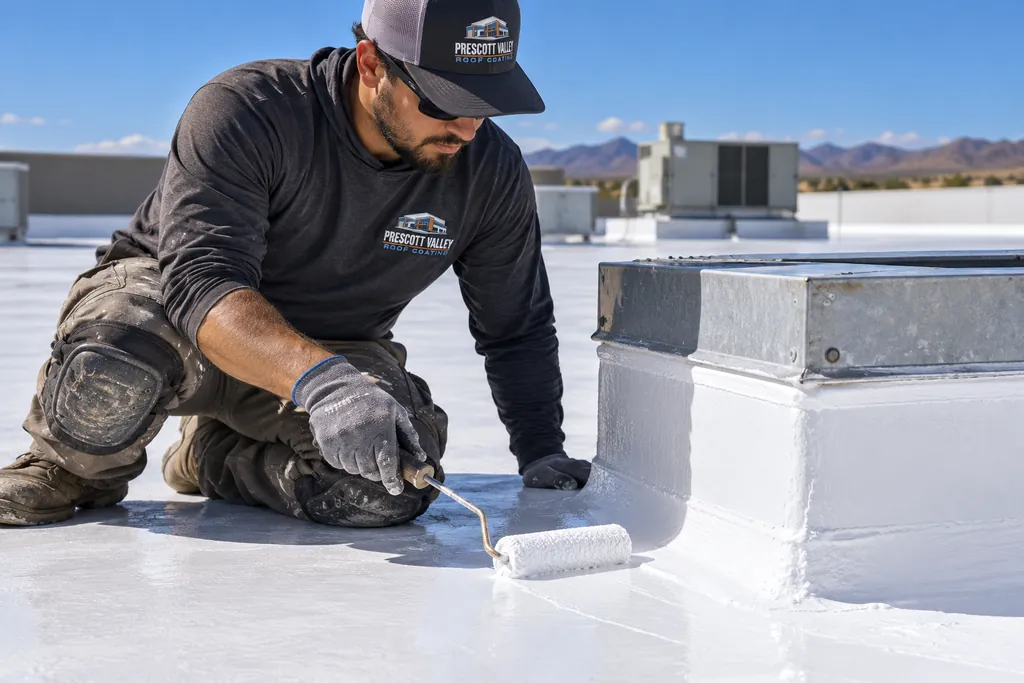
Coverage along eaves and valleys gets checked on a final walk with you, and you get the yearly checks that keep the coating working until the next recoat.
Many shingle buildings have other roof types attached. Each gets the system that fits it.
Many shingle buildings have a flat section over an addition or entry. Those low-slope areas often take silicone.
Silicone roof coating details
Metal canopies and shop wings on the same property get their own fastener and lap work before coating.
Metal roof coating detailsMost asked
Most commercial coatings last 10 to 20 years here, depending on the product, the applied thickness, and how well the roof is cared for through winter. On shingles, the result also rests on the shingles underneath holding up, so spring inspections matter. When the surface wears thin, it can be cleaned and recoated.
It can. Some shingle makers allow certain coatings and others prohibit them, so we check the maker's guidance before recommending anything. If coating would conflict with a warranty you want to keep, we tell you before any work is scoped.
The City of Prescott requires a commercial permit for a second layer of shingles and for a full tear-off, and its permit list does not address coating. We confirm the rule for each job with the city, the town, or Yavapai County.
Yes. Coating covers the granule texture and color with a uniform finish, usually white, gray, or tan. From the ground the roof looks smoother and lighter, so check any property design rules or lease terms first.
Usually the whole roof gets coated for an even surface and simpler upkeep. A single slope can be done when the rest of the roof is in better shape and the difference in finish is acceptable to you.
Curled or brittle tabs, bare mat, soft decking, or two layers already in place all point to replacement. If the inspection finds any of these across the roof, coating will not hold up, and we say so with photos.
Yes. Snow sliding off and refreezing at the eaves is the bigger concern, so eaves and drip edges are sealed and checked closely. Use plastic tools if snow ever has to be cleared by hand.
Tell us the roof's age and what you see in the gutters. You get a straight answer on coating or replacing.
Leave a name and number and a roofing contact will call you back.
Or call now: (928) 436-4811