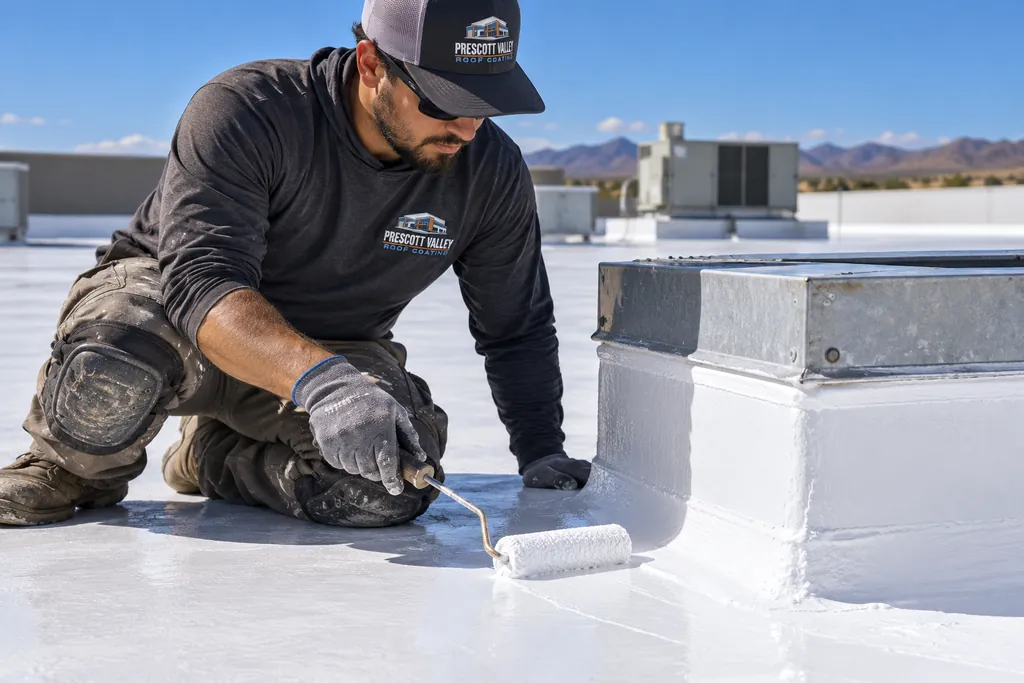
Acrylic Roof Coating
Well-drained roofs coated in the dry weeks of late spring and early fall.
How acrylic roof coating works
We provide commercial roof coating in Cordes Lakes, near where SR 69 meets I-17. Each job is scheduled around the two things that stop coating work: afternoon storms and cold nights.
Two things close the coating window here. The monsoon season, June 15 to September 30, brings afternoon storms, and freezing winter nights stop most cure schedules. A job is planned to fit between them.
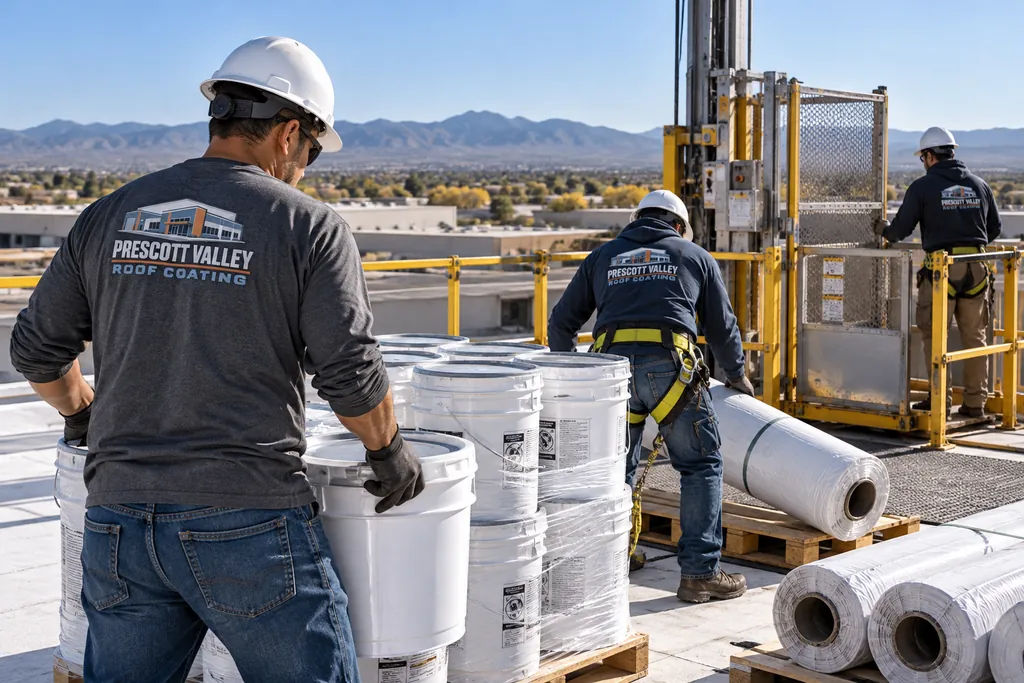
In practice that means booking the work for late spring or early fall, staging materials on site the day before, and starting at first light. Crews coat in sections that can be finished and rain-safe before early afternoon.
Sun, storms, and cold nights each leave their own marks on a low-slope roof.
Long summer exposure dries and cracks old coatings and asphalt surfaces. Cracks are cleaned out and sealed, and badly crazed areas get fabric before recoating.
Short, heavy downpours overload small drains and scuppers. Outlets are cleared and checked for size, and any that back water up get attention before coating.
Gust fronts ahead of storms pull at edge metal and roof hatches. Loose edges are refastened and sealed so wind-driven rain stays out.
Water left in low spots after fall storms can freeze overnight and open the surface around it. Low spots get measured and either filled or covered with silicone.
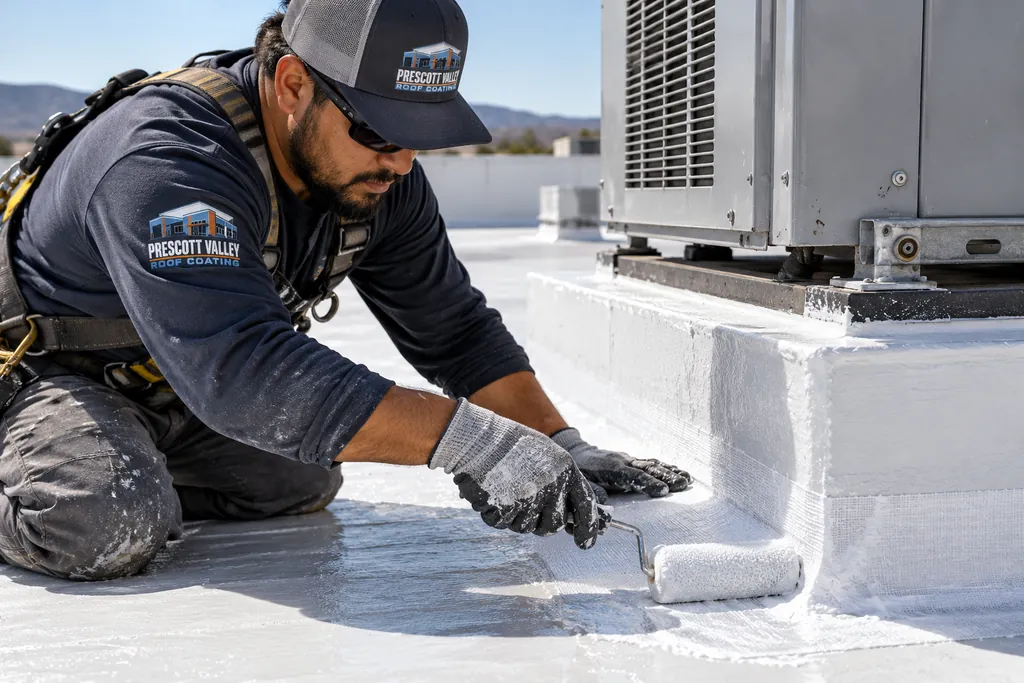
Rooftop units and exhaust fans sit on curbs whose corners crack through hot days and cold nights. Each corner is reinforced with fabric in the coating.
Planned around the weather, a coating job here goes on fast and stays put.
Coating avoids the long open-roof days a tear-off needs, so the work fits into short windows between storms. Sections are sealed the same morning they are opened.
A white coating takes the summer sun that breaks down asphalt and old coatings, and it reflects part of that heat off the roof.
The existing roof stays as the base, so nothing needs hauling away from the property. That keeps the job smaller and the schedule shorter.
When the surface wears, the roof is cleaned and recoated in the next good window. The underlying roof stays in place through each cycle.
These three systems cover most commercial roofs near the junction.
Well-drained roofs coated in the dry weeks of late spring and early fall.
How acrylic roof coating works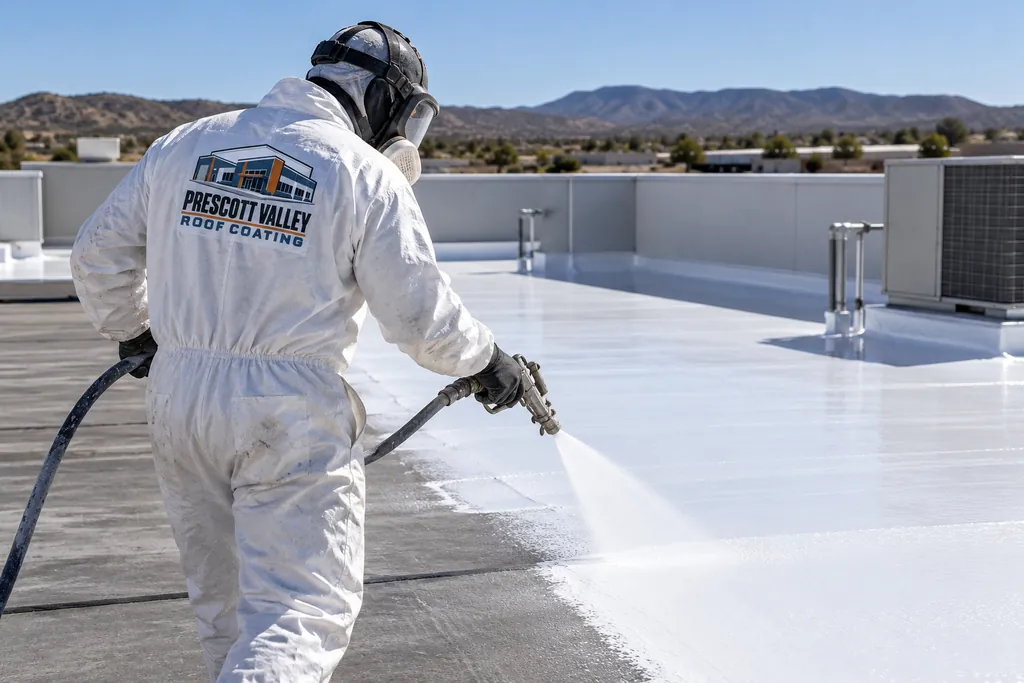
Flat roofs with low spots, and jobs that need to run closer to cooler weather.
How silicone roof coating works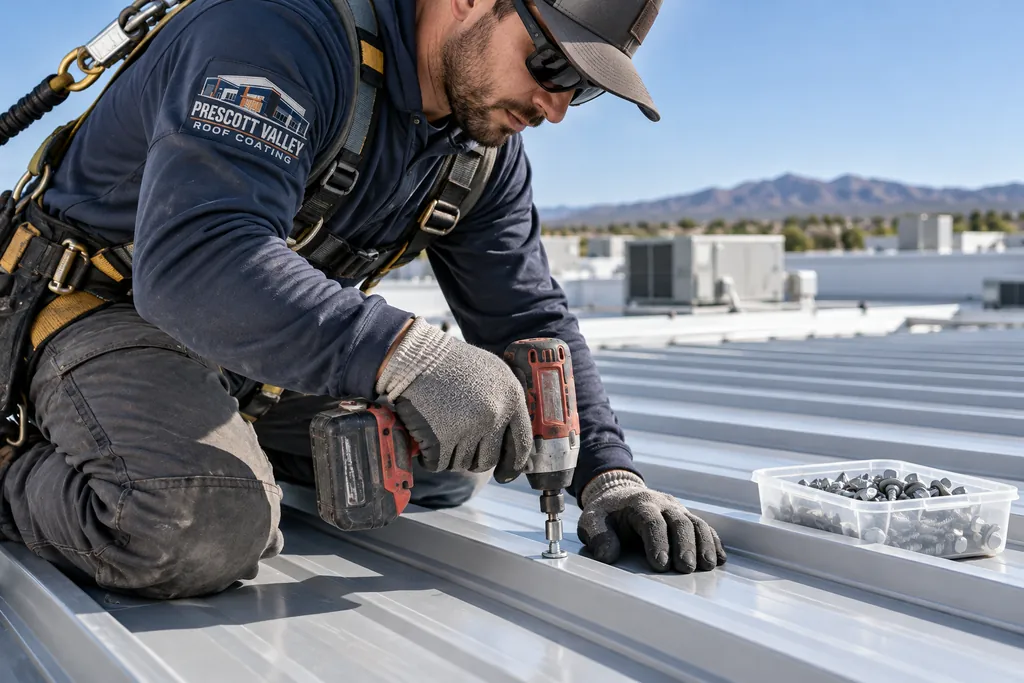
Metal shops and storage buildings, with fasteners and laps sealed before coating.
How metal roof coating worksCall and tell us whether it leaks only in heavy downpours. Storm-only leaks often point to an overloaded drain or a gust-lifted edge.
(928) 436-4811The steps match any coating job. The timing around them is what changes here.
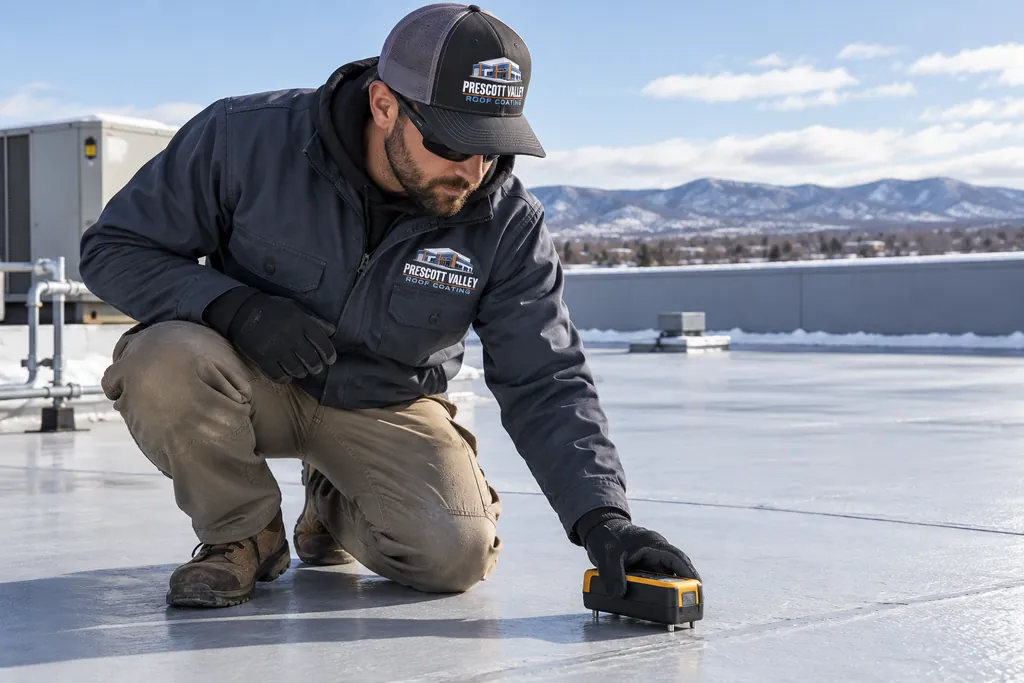
We inspect the roof, take moisture readings, and pick target weeks for the work. Repairs that can happen in any weather are scheduled right away.
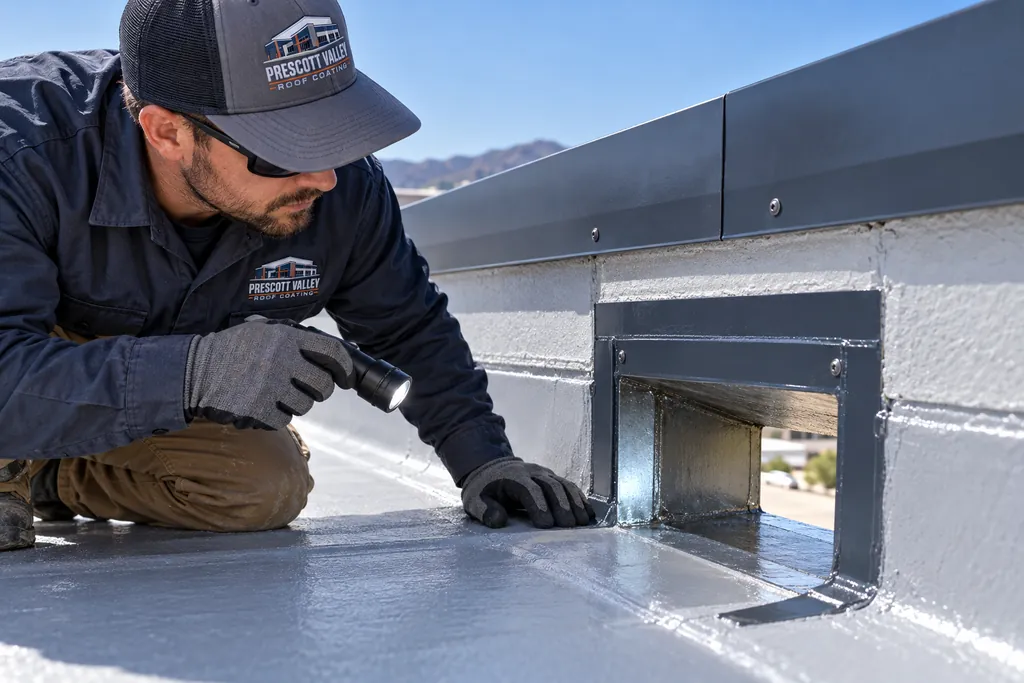
Drains, scuppers, edge metal, and curbs are repaired first, often weeks before coating. That way the roof is ready the moment a good window opens.
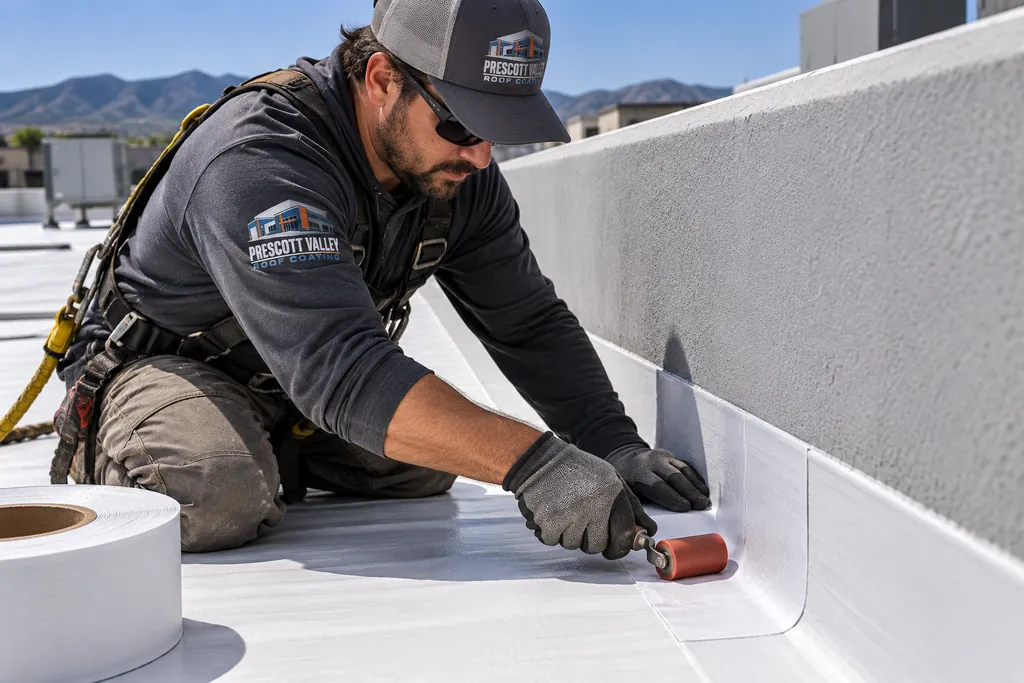
Cracked surfaces and open seams are sealed and reinforced with fabric, so the field coat goes over a tight roof in one pass.
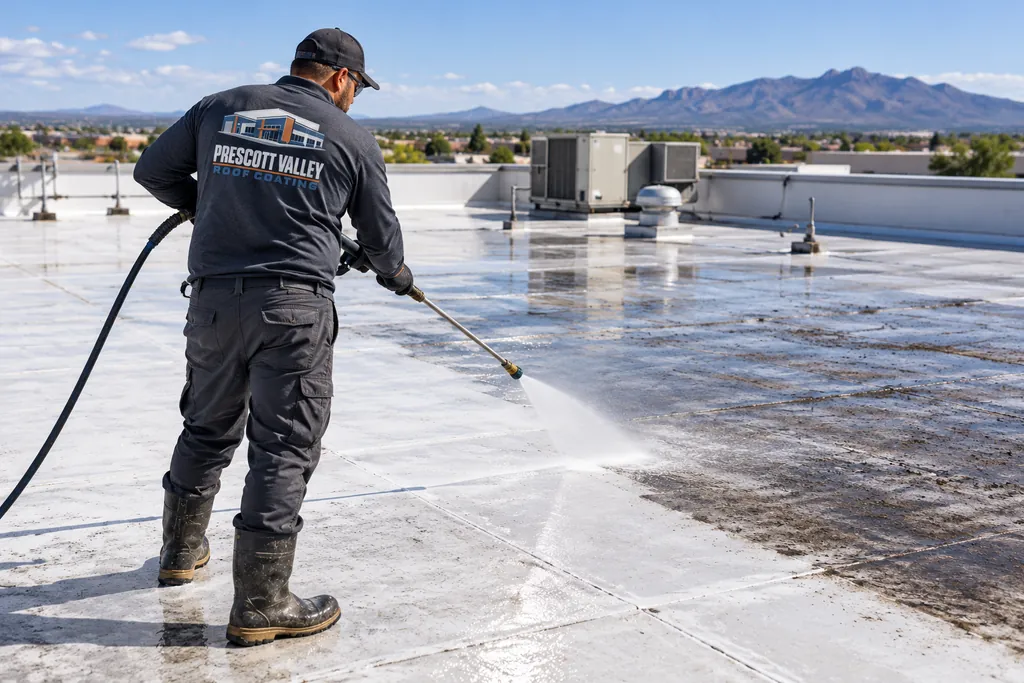
The roof is washed and dried, and materials are staged the day before coating. Work starts at first light to finish sections before storms build.
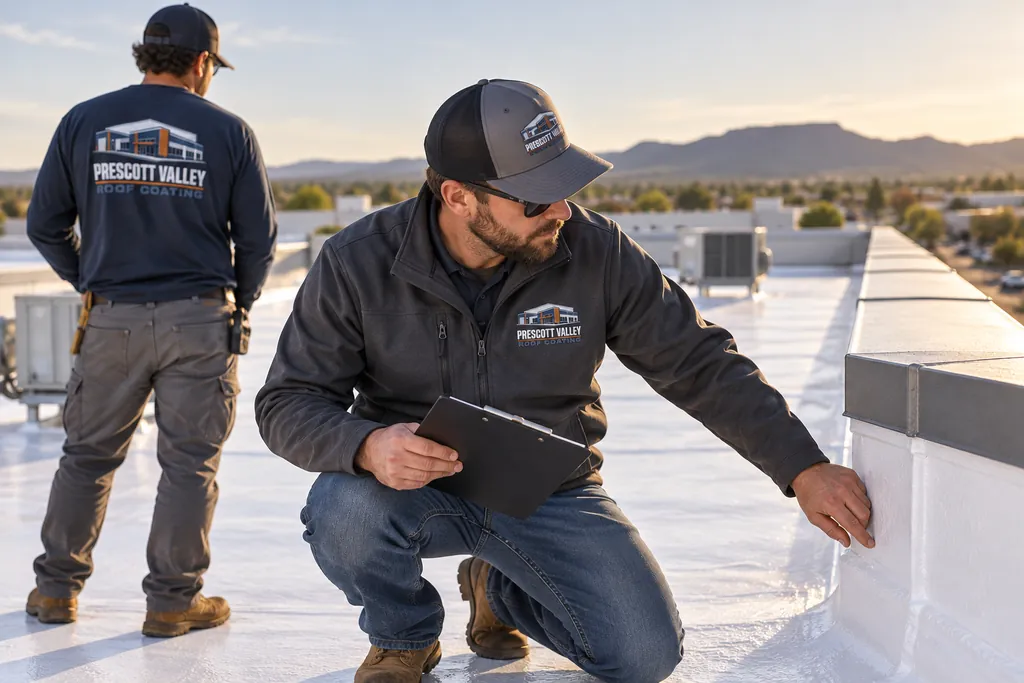
Each section is coated, checked for thickness, and left rain-safe by early afternoon. A final walk wraps up the job with photos and a recoat plan.
Cordes Lakes sits at the south end of our SR 69 corridor.
Most asked
Late spring and early fall, between the freezing nights of winter and the monsoon season that runs June 15 to September 30. Summer jobs work with first-light starts, and we watch the storm forecast each morning before opening a section.
Sections are sized so they can be finished and skinned over before the usual afternoon build-up. If a storm comes early, work stops, open edges are sealed, and the section resumes on the next dry morning.
Rarely. Most coatings need the roof and air above a minimum temperature for hours after application, and freezing nights stop that. Winter goes to inspections and repairs so the roof is ready for spring.
Cordes Lakes is unincorporated, so building permits go through Yavapai County. We confirm with the county whether the scope of a coating job needs one and plan any inspection into the schedule.
Materials come in by truck the day before coating and stay staged on the property with the owner's permission. Lifts are set on firm ground near the roof edge, where they reach the work without blocking traffic.
Short, heavy rain overloads small drains and scuppers and pushes water under lifted edges. Steady rain drains fine, so the leak hides between storms. We check outlet size and edge fastening on the inspection.
The roof has to be dry for coating to bond, so we wait for it to dry. Low spots that hold water for days get measured and fixed, or covered with silicone, which tolerates ponding.
Most commercial roofs need several working days to two weeks. Weather holds can stretch the calendar, which is why repairs are finished early and coating days are picked from the forecast.
Tell us about the roof and when you would like the work done. We plan repairs early and book the coating for the next good window.
Leave a name and number and a roofing contact will call you back.
Or call now: (928) 436-4811