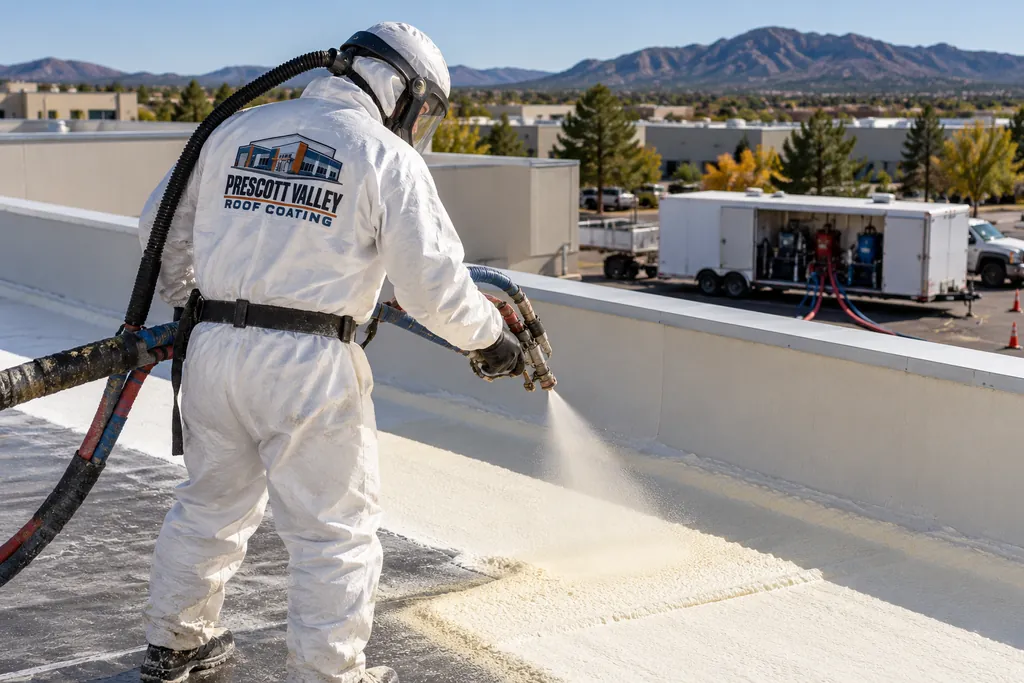
Spray Foam Roofing
Foam roofs with hail bruises, repaired and given a fresh topcoat at the right thickness.
How spray foam roofing works
We coat commercial roofs in Spring Valley and start with a storm check. Hail and wind leave marks on foam, coatings, and metal that are hard to see from below.
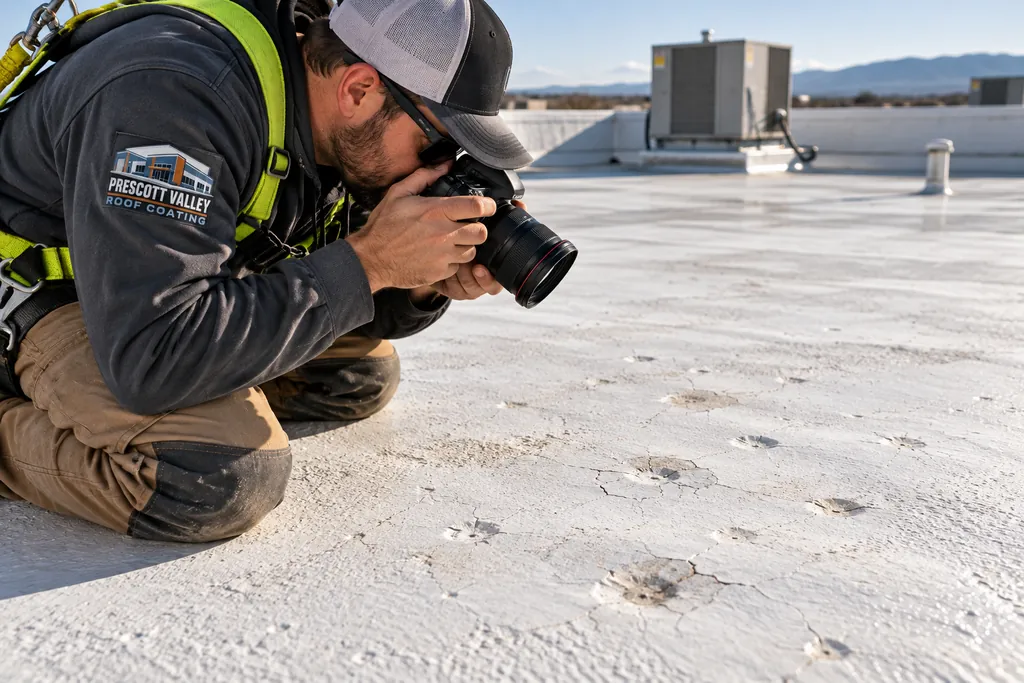
The monsoon season runs June 15 to September 30, and storms in central Arizona occasionally drop hail. On a commercial roof that means bruised foam, punctured coating, and dented metal, often in a pattern visible only from the roof itself.
We walk the roof after the storm, mark each impact, and photograph it with a date. Small punctures get sealed right away so water stays out, and the record stays with you for any insurance question you raise.
These five areas take the brunt of hail, wind, and downpours on a low-slope roof.
Hail leaves round bruises in foam and small cracks or punctures in coatings. Each one is marked, measured, and either sealed or cut out and patched.
Gust fronts ahead of storms pull at edge metal and coping. Loose sections are refastened and the joints resealed before rain can get behind them.
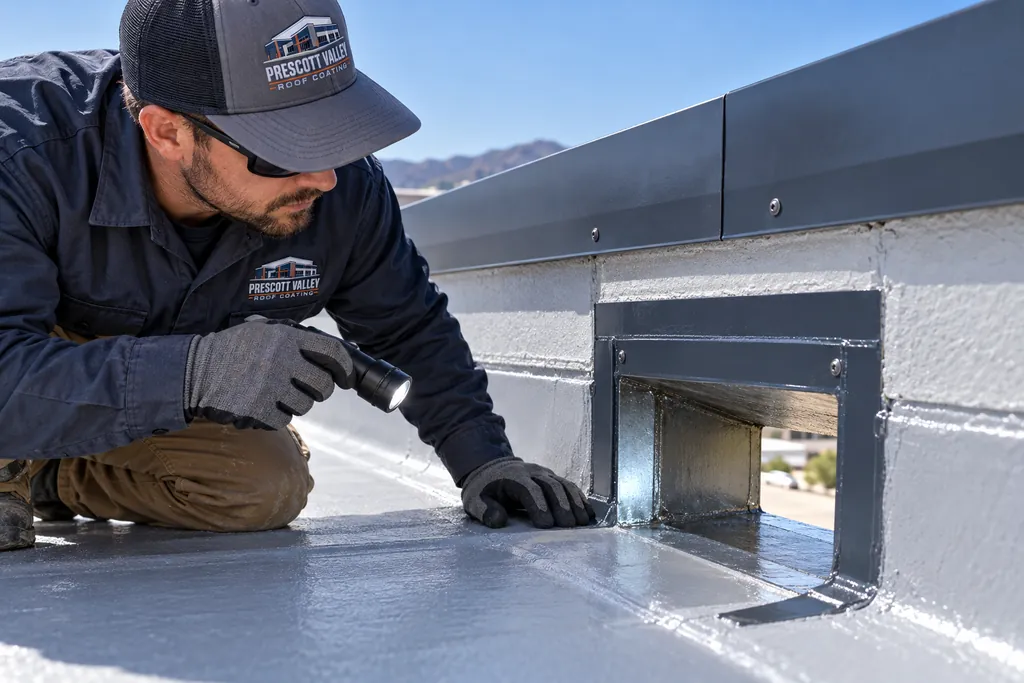
Unit fins and cabinets dent in hail, and the curb flashing below them can crack. We note unit damage for your HVAC contractor and repair the flashing.
Heavy rain washes hailstones, leaves, and grit into drains and scuppers. Clogged outlets back water up across the roof, so they are cleared on every storm visit.
Plastic skylight domes crack or shatter in larger hail. Cracked domes are covered at once and replaced, since a broken skylight leaks straight into the room below.
A storm-damaged coating is usually repaired and recoated, with the roof underneath left in place.
Sealing hail punctures quickly keeps water out of the foam or insulation underneath. A recoat then restores full thickness across the roof, so the next storm hits a complete surface.
Most hail damage on a coated roof sits in the top layer. Cleaning, patching, and recoating cost far less than tearing off the roof and starting over.
Dated photos and notes from each storm visit build a history of the roof. That record helps you plan recoats and answer questions later.
Roofs that see repeated hail can get a thicker topcoat or a polyurethane layer at the recoat, which stands up better to impact.
Storm repairs here usually end with one of these coatings.
Foam roofs with hail bruises, repaired and given a fresh topcoat at the right thickness.
How spray foam roofing works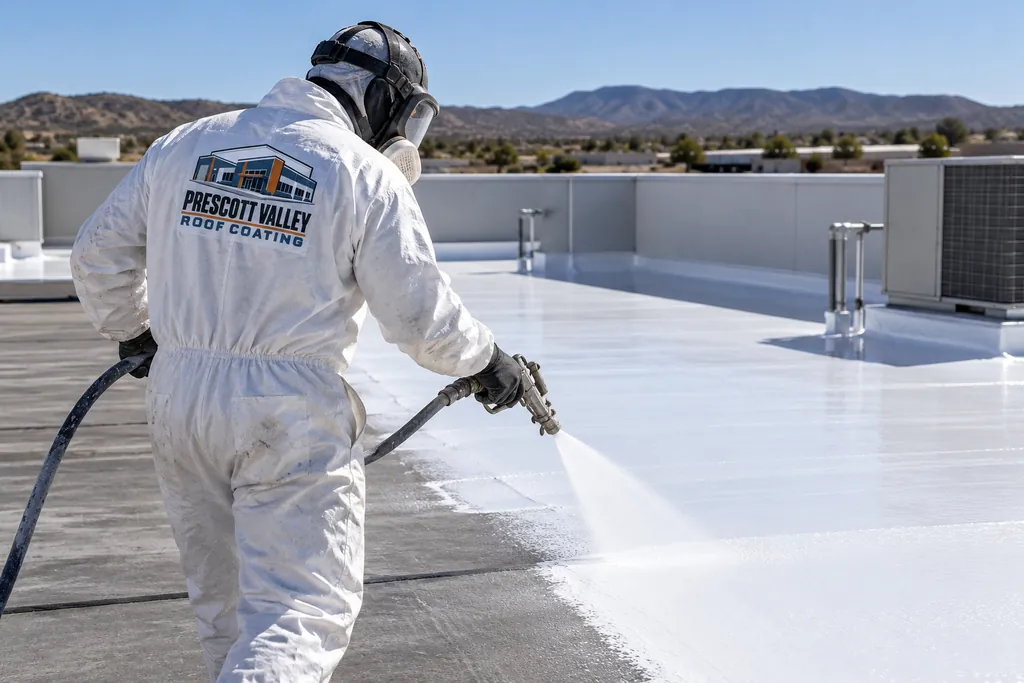
Low-slope roofs with punctured or worn coatings, patched and recoated with silicone.
How silicone roof coating works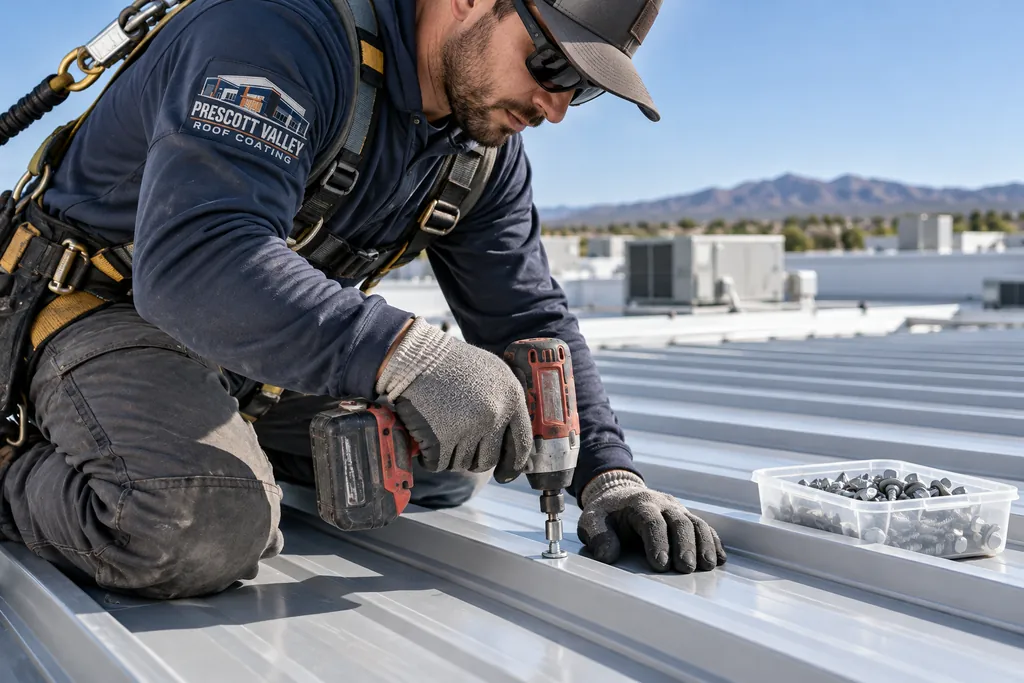
Dented or loosened metal panels, refastened and sealed before a protective coat.
How metal roof coating worksCall after the storm passes and tell us the hail size you saw. A roof check before the next rain keeps small punctures from turning into leaks.
(928) 436-4811Storm work starts with documentation and ends with a recoat.
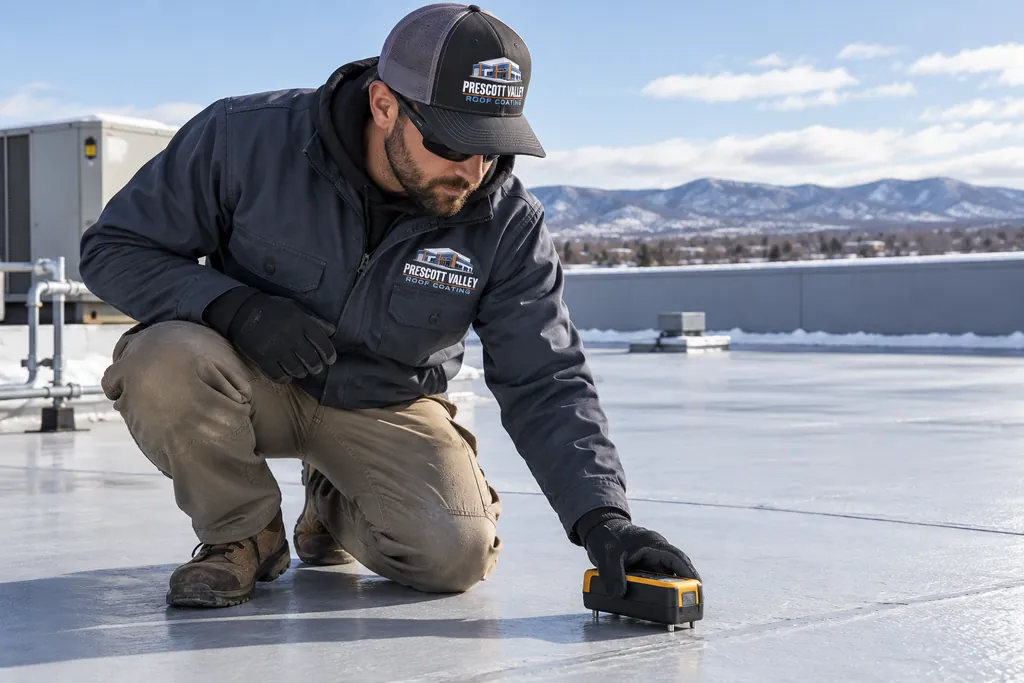
We walk the roof after the storm, mark every impact, and photograph each one with the date. Moisture readings check whether water got under any punctures.
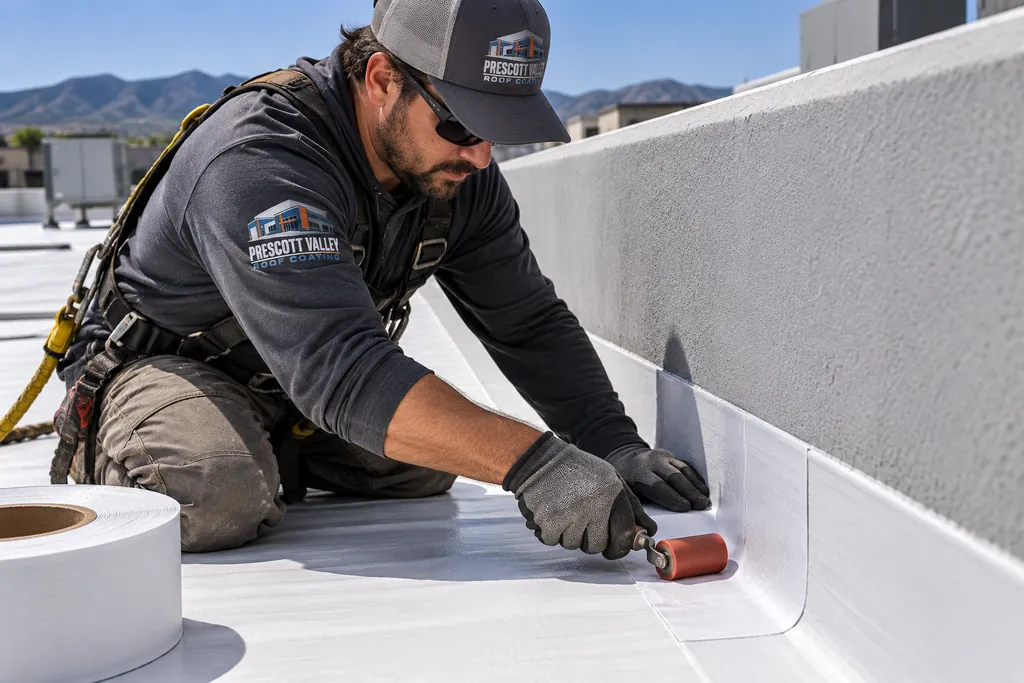
Small punctures and cracks are sealed during the first visit when weather allows. Cracked skylight domes are covered so the room below stays dry.
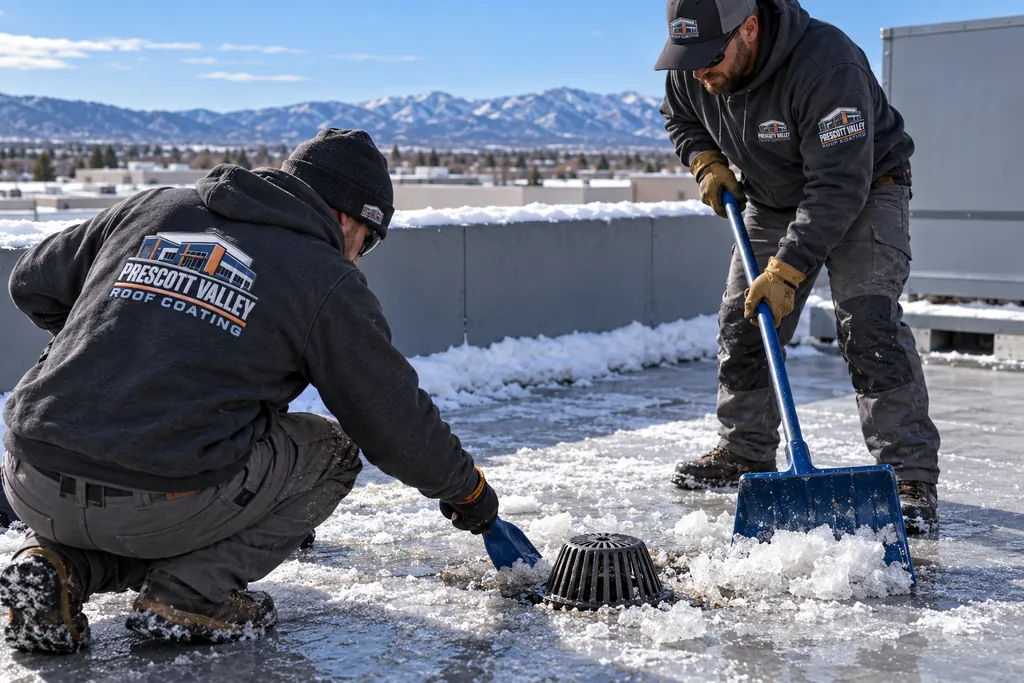
Hailstones, leaves, and grit come out of drains and scuppers. Water has to leave the roof freely before any repair or recoat is planned.
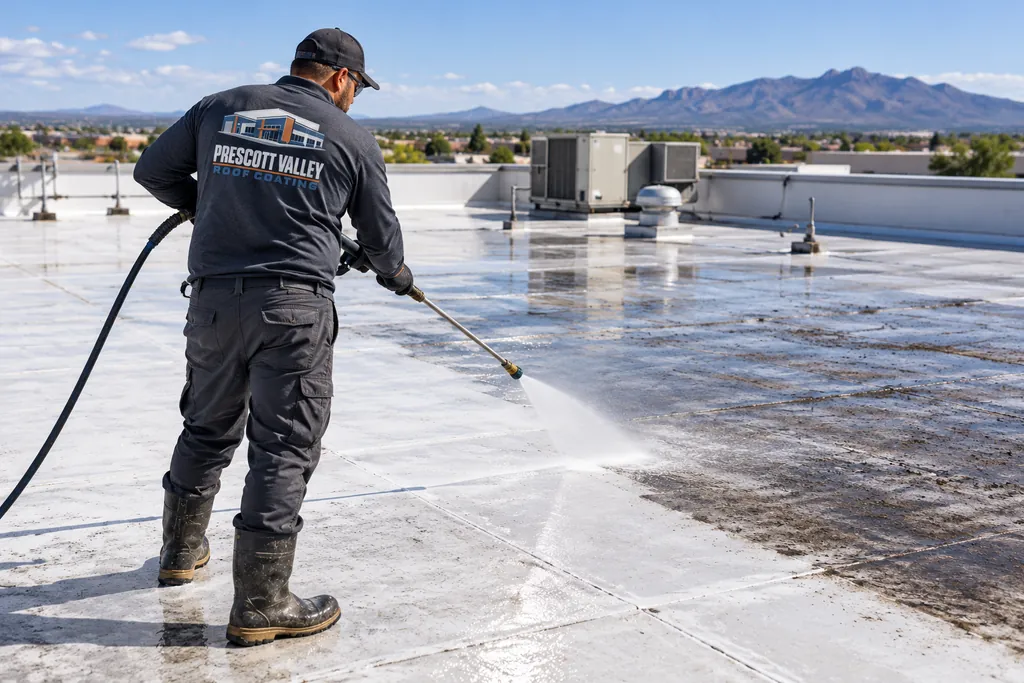
Once the season settles, the roof is washed, larger damage is cut out and patched, and a fresh coat goes on at full thickness.
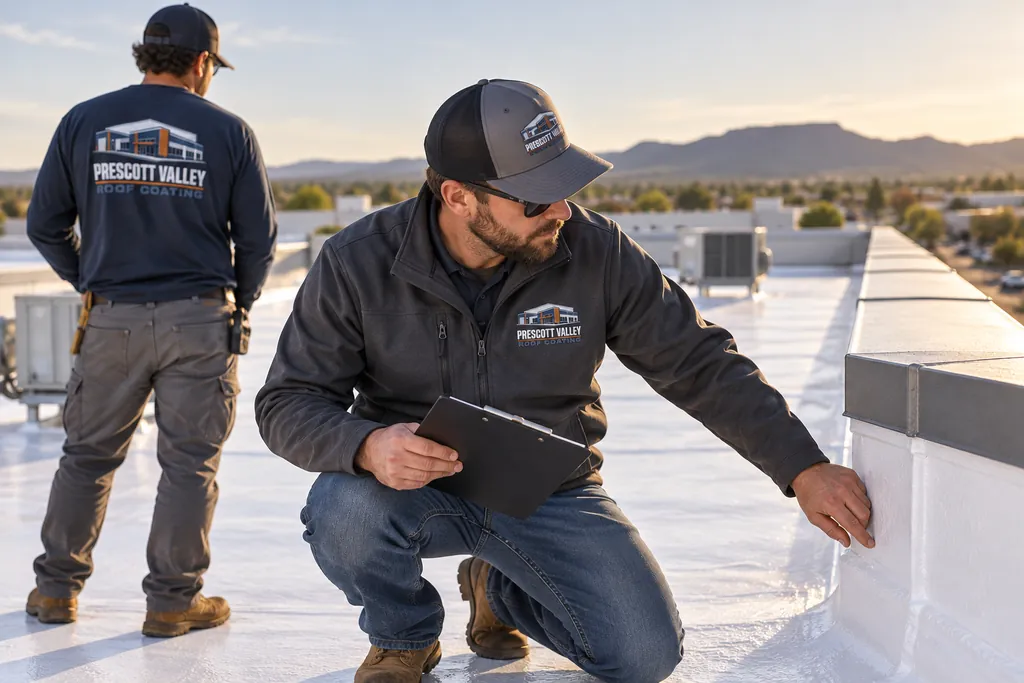
You get the dated photos, the repair list, and the recoat details for your files. That history helps with planning the next recoat.
Spring Valley sits off SR 69 between Mayer and Cordes Lakes.
Most asked
After any storm with hail you could see on the ground, yes. Small punctures in a coating are hard to spot from below and easy to seal early. Checking before the next rain keeps water out of the foam or insulation underneath.
We can show you what we find: marks, punctures, dents, and lifted edges, with dated photos. We describe the condition and the repair it needs. Questions about the cause or your coverage belong with your insurer.
Rarely on a coated roof. Most hail damage sits in the coating or the top of the foam, which can be patched and recoated. Replacement comes up when water has soaked the insulation across large areas.
Before the next rain. Monsoon storms can follow each other within days, and water that gets into foam or insulation through a puncture spreads under the surface. Temporary sealing on the first visit buys time for a full recoat.
It adds a buffer over the foam or membrane, so smaller stones bruise the coating instead of reaching the layer below. Very large hail can still damage any roof surface, thick topcoat or thin.
Gust fronts lift edge metal, coping, and loose flashing. We check every edge and penetration on a storm visit, refasten what moved, and reseal the joints so the next storm finds everything closed.
Spring Valley is unincorporated, so building permits go through Yavapai County. Whether storm repairs or a recoat need one comes down to the scope, and we confirm it with the county before work starts.
Yes, with early starts. Monsoon storms usually build in the afternoon, so coating goes on in the morning and has time to skin over before the clouds arrive. Late September and October often bring steadier weather.
Tell us when the storm hit and what you saw. We document the roof and seal what needs it first.
Leave a name and number and a roofing contact will call you back.
Or call now: (928) 436-4811